A Guide to this Blog

Saturday, June 5, 2021

Using Schemas with Related Texts

The drive for senior NSW students to locate and select their own related texts has diminished somewhat since the days of Belonging and Discovery. The 2019 syllabus de-emphasised it across the entire Standard and Advanced curriculum, relegating it as a single Common Module element that doesn't require external assessment (meaning there is no requirement for students to recall their related text in the HSC exam... make of that what you will!) 

All that said, Extension English 1 still requires students to find some related texts for their elective module. In total, the elective module involves the study of three prescribed texts (selected from a pool of six) and two related texts - with students expected to (most likely) draw upon their knowledge of two prescribed and one related text for the HSC question. 

In a 1 hour exam context, it's quite a feat to be able to tie together that many texts and tailor a response to a previously unseen essay question.

I found myself grappling with this challenge when I first picked up an Extension class a few years ago, thinking to myself: 

How does one prepare Year 12 students to be adaptable while managing sophisticated and interlocking knowledge of that many texts?

A schema works. This is a way to guide students in pulling out specific textual examples from their texts. The examples are collected in connection to the module descriptor, which can be a highly effective way to organise thinking if the student is made to do it over and over again with in the following ways:

  1. Use the schema with multiple texts at the same time in a single lesson
  2. Use the schema with the same texts at different times throughout the year

My schema was developed for the Literary Homelands elective but versions could be easily made for any of the other electives. I was heavily influenced by Paul Kiem's excellent video on the Question 1 segment of the History Extension exam. I recommend watching it even if you have no connection at all to the teaching of History as it's a really valuable approach to teaching adaptable critical thinking and the synthesis of ideas at a more academic level. 

Download schema here.

Once students have used the schema a bunch of times they can then try out some paragraph or essay responses. I start them out with the instruction to come up with a thesis in response to the question (a whole other exercise) and then to tie this thesis to one of the themes in the schema. The notes the student has made on each of their texts (both prescribed and related) in relation to this specific theme can then be pulled from each schema to construct a single thematically-driven essay paragraph that ties together two, three or even four texts. 

It's not the only way to do things but my students found it helpful so maybe yours will too :)

Saturday, April 24, 2021

Women on the Australian Home Front in WW1

Part of the NSW Stage 5 History syllabus (the 'Australians at War' study) includes a dot point highlighting the role of women in WWI and WWII. I was led down a rabbit hole while researching this for WWI in particular and came up with the following lesson, which seemed to work well with my class last week. 

Anyway, here's the lesson:

1. Start with a definition activity for the word 'home front'. I actually do this for nearly all of my classes - History and English alike; I feel that improving metalanguage and general vocabulary is one of the key building blocks for learning. There's a lot of research in literacy that suggests that the best way to teach a new word is to get the students to use it in context, so I simply chuck the word up on the board and tell students to put it into a sentence, any sentence that makes sense, and I try to walk around checking on individual students to see how they've gone. It's a good settling routine.

2. After reinforcing the idea of the home front and what it is, have the class contribute to the construction of a mindmap that covers the lives of pre-war women in Australia. Branches of this mindmap could include things such as:

  • Division of labour - men worked, women ran the household. In poorer families, women helped with work. It was considered important to keep the father well-fed as he was the only 'working' parent a lot of the time. 
  • Women were housewives and their workload was intense - nearly all food was made from scratch and lots of clothes were too. Discuss things like the lack of refrigerators and how this might impact on home life, what would happen if clothing ripped, what a washboard was, etc.
  • Women were mothers - it was common in this era to have an average of 10 to 12 children.
  • Women's rights - women had gained the right to vote, state by state, only quite recently. The last state that established the right for women to vote was in 1911, only 3 years before the war broke out. 
This can then pivot into a class discussion of how the above might have changed once all the men went off to war. How would women have been impacted by this? 

3. Organise a lottery =- students draw letters (A to L) out of a hat or box [you'll need to just write these onto little slips of paper]. Students then search for their corresponding description in the following document; The Role of Women in WWI. After finding out what 'their' role might have been as a woman in WW1-era Australia, students should read the accompanying detail and respond to the following questions:

4. The Role of Women in World War I

A. What role did you get?
B. What was your role in World War I?
C. How did your role come about?
D. How helpful do you think you were in comparison to the other roles that have been listed?
E. How appreciative do you think people in Australia were of you at the time?
F. If there was a war like WWI today, do you think you would be needed in the same way? Why or why not?
G. Create a poster that advertises your role's contribution or belief. 

The above questions start at the simple and then move into the evaluative and empathy-based, with explicit regard given to context, thus highlighting continuity and change over time. 

I didn't plan it this way but this activity was timed well to coincide with ANZAC Day!

We will remember them. 

Lest we forget. 

Saturday, April 17, 2021

Conversations about Hag-Seed

Epigraphs

The Advanced English Textual Conversations module provides an option to study the pairing of Shakespeare's The Tempest and Margaret Atwood's Hag-Seed. It's an accessible and popular option, and there's an ever-increasing amount of material becoming available to assist teachers and students. I usually approach the pairing by having students read The Tempest in one go, and then looking at Shakespeare's text through the lens of Hag-Seed

One of the literary structural conceits used by Atwood in her novel is the epigraph. In this context, an epigraph is the use of a quote or phrase at the beginning of a text to 'prime' the reader. This is a form of textual allusion, which is fitting when we consider that Hag-Seed itself is a giant piece of textual allusion. Atwood isn't shy in this regard, she uses not one epigraph but three.

Here's a sheet that invites students to analyse the epigraphs: The Art of the Epigraph in Hag-Seed

In this activity, students:

  • Look at what an epigraph is and how it functions.
  • Consider what each epigraph specifically says about Hag-Seed and/or why Atwood has chosen this particular quote to use. 
  • Take the intertextuality a step further by using a quote from either The Tempest or Hag-Seed as an epigraph for their own piece of writing.
Epigraphs are important for Advanced students to learn about because they exist as a higher order form of comprehension. They are a sophisticated (and potentially obscure) way for writers to experiment with abstraction, a way to distil the essence or thematic core of a piece of writing, or to even ironically write against the idea of a piece. 

Socratic Discussion

Another way of getting Advanced students to better comprehend the textual conversation between The Tempest and Hag-Seed is the use of Socratic circles. This allows for the generation of discussion about the texts without focusing too much on lower order skills like grammar and sentence construction. 

I've already written about this approach a while back if you're interested (Socratic circles) and, for the purposes of this blog entry, I've included some useful discussion questions below. I like to use these questions around the halfway mark in the module - they're intended to push quieter students into forming and voicing opinions, and can also give struggling writers an opportunity to demonstrate their advanced thinking. The beauty of Socratic discussion is in sparking a single comment from a more forthright student and then watching other students build on this or react to it. 

Anyway, here are the questions:
  • Does Prospero have the right to enslave Caliban?
  • Prospero's most prized possession is his books and he arranges to take these with him to the island, along with his daughter. What two items would you take?
  • Should Prospero have forgiven Antonio? Does he have a right to revenge?
  • Felix tells himself to 'trust the play' but then questions himself with 'but is the play trustworthy?' What do you think is meant by this?
  • Thinking of Caliban and the inmates in Hag-Seed, which is more influential - nature or nurture?
  • In what way is Miranda a product of her time?
  • Prospero was overthrown by his own brother, which is indicative of a familiar thread in Shakespeare's plays. What is this theme and is it still relevant today?
  • Who is more justified in his methods - Prospero or Felix?
  • In what way is the theme of 'performance' relevant to our everyday lives?
  • Who is 'the Other' in our society? Are they fairly represented in the media? Fairly represented in Shakespeare's time? Is Caliban a racist stereotype?
  • Would The Tempest as a play be better off without the characters of Stephano and Trinculo?
  • If Prospero were an allegory for Shakespeare himself, who would be the closest equivalent for Margaret Atwood in Hag-Seed?
  • In what way does Hag-Seed succeed in updating The Tempest for a modern day audience?
  • In what way does it fail?
  • Should any text be fair game for adaptation or sequelising? 
I've asked these questions to a range of students and it's genuinely fascinating to hear the discussions that emerge, to see the way in which conversations fold over the top of each other, and the ideas that are extended through Socratic discussion. 

They could probably even work as a writing activity for individual students who need further extension.

Saturday, March 20, 2021

Craft of Writing: Allusion, Tmesis, and Euphemism

It's been a while since I posted some Craft of Writing activities so I thought this rainy Sunday might be a good time to continue. You can find previous, similar Craft of Writing resources here. If you haven't seen them before, the approach involves covering a writing technique in a ten minute segment at the start of the lesson. Students are shown how to use a technique, alongside examples, and then asked to put it into practice. 

There are hundreds of literary techniques that we don't usually touch on in the English classroom. There can be a danger in visiting too many of the more obscure techniques so it's up to teacher discretion on how you want to approach these and with which students (Standard, Advanced, or even Extension). I find that Advanced students, at least, are often genuinely fascinated in hearing about some of these techniques as it can illuminate some things that they might already be doing with their own writing. I always caution students with a reminder that they don't need to memorise all of these - just pick the ones they like!

Allusion

What is it: An 'allusion' is a reference, either implicit or explicit, to something outside of the text. Allusions can be categorised in various ways by adding a qualifying adjective, such as Historical allusion, Literary allusion, Religious allusion, Folkloric allusion, and Mythological allusion, and are mentioned in passing rather than described in great detail. 

Examples: 

  • (RELIGIOUS) "Only you can see (...) the glasses of teeth, Thou Shalt Not on the wall" - Under Milk Wood by Dylan Thomas.
  • (FOLKLORIC) "Sucking him down deep into the Davy dark" - Under Milk Wood by Dylan Thomas.
  • (LITERARY) "Along with your whoreson cigarettes, may the red plague rid them" - Hag-Seed by Margaret Atwood.
Why use it:
  • Writers may use it as a means to connect with their audience as the allusion usually requires the responder to understand what it is in order for them to grasp the author's meaning.
  • Helps to simplify complex ideas through the drawing of a comparison.
  • Can add emotional weight to a text when the reader brings their own knowledge of the allusion with them (EG. Religious or mythological allusions). 
  • Can direct the reader towards exploring big ideas in other texts or areas of knowledge. 
Quick Activity: Use a mythological allusion to describe a character.

Tmesis

What is it: Meaning 'to cut', tmesis describes the process of breaking a phrase or word apart through inserting a new word into its middle. 

Examples:
  • "Milk waking wood", "Captain napping Cat" - Under Milk Wood by Dylan Thomas.
  • "Fan-bloody-tastic" - Pygmalion by Bernard Shaw.
Why use it:
  • Can be used to create humour by emphasising a particular phrase or word.
  • Places stress on a particular part of a text by forcing the reader to re-frame their understanding of a word or phrase - they will see the broken-up phrase first before realising what it would say without the inserted word.
  • Can be used to add informality to speech, or to exaggerate.  
Quick Activity: Think of three common two-word phrases and insert another word to break them up BUT consider what this word adds or changes in this phrase and why/how it could be used.

Euphemism

What is it: Using a polite or indirect expression to replace a harsher or more unpleasant truth. It is a form of a figurative language in that the euphemistic phrase does not mean what it literally appears to mean. 

Examples:
  • "Your daughter and the Moor are now making the beast with two backs" - Othello by William Shakespeare.
  • "His father Esau (...) undogcollared because of his little weakness" - Under Milk Wood by Dylan Thomas.
  • Common ones in English language: 'Passed Away" (meaning to die), "Negative patient outcome" (dying on the operating table), "Downsizing" (to fire people from their jobs), "In the family way" (pregnant). 
Why use it:
  • Euphemism is highly reliant on context - some euphemism are constructed for purposes of relaying information that may be considered offensive or inappropriate in certain situations or with certain audiences.
  • Allows writers to express ideas that are considered 'taboo' or embarrassing.
  • Can be used humorously when broaching difficult subject matter.
  • Can be used to political purposes to disguise the true meaning of something.
Quick Activity: Think of one of the many awful things to happen in any of the main texts you've looked at for the HSC and use a euphemism to describe it. 

Here are these three writing elements all in one sheet for ease of use:
Happy writing!

WWII Australian Home Front Map


Hello! Just a short blog today on material related to the Stage 5 'Australians at War' Depth Study. I was looking around for resources on Japanese attacks on Australia during WWII and couldn't really find a clear or free one that suited my purposes, so I put together the map above. 

It includes the following information:
  • Japanese air raids. 
  • Australian ships sunk.
  • Major PoW camps. 
  • PoW outbreaks.
There's also a worksheet that incorporates some questions alongside the map - download here

And a large, downloadable version of the map.

Saturday, February 27, 2021

Researching for History Curriculum

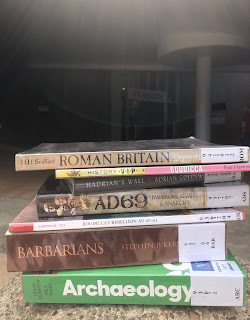
Thanks Penrith Library!

I thought I'd share with you today one of my current methods for researching and writing History curriculum. There's no single way to program, of course, but I do know that if someone had outlined a few methodologies to me back in my university days then it might have made things a little easier. I've experimented with various ways of writing programs for teaching and I guess that 2020-21 was the moment where I finally became happy with an approach to researching for the subject of History. So I thought I'd share it!

There were a few contributing factors that helped me arrive at the method I now use... 

  • In 2019 I was commissioned to write some chapters for the Cambridge History Transformed series. In order to feel comfortable in providing a baseline from which other teachers could work, I knew that I would have to undertake a considerable amount of research.
  • At my new school I was placed onto Ancient History, a subject I hadn't taught for at least 9 years. For all intents and purposes I'm basically teaching it for the first time so I needed to refresh my approach.  
  • I fortuitously attended some online PL conducted by the History Teachers' Association of NSW. This 'Introduction to Ancient History' module was run by Dennis Mootz, who highlighted the use of Excel Spreadsheets as a powerful aggregation tool for historians to use. 
My approach isn't revolutionary but I'm finding it increasingly useful and it's something I'll be teaching a variation of to my students for the upcoming Historical Investigation component of Ancient History. I'll also teach it when I next have a History Extension class. 

Step 1: Look at the syllabus. 

I start by reading through the part of the syllabus I'll be teaching. In this case, for example, it's the introductory Nature of Ancient History topic 'The Treatment and Display of Human Remains'. 

Then I code the content dot points within the syllabus for my own reference, using the following schema: 
  • 1 = The Nature of Ancient History as it's the first module in the Preliminary course. 
  • 6 = The Treatment and Display of Human Remains as it's the 6th topic within the module. 
  • The four main dot points within this topic are then labelled A, B, C, D.
  • Any sub-dot points within these are labelled with a further number, EG. 1, 2, 3, 4. 
Here is what it looks like after I code it...

Students investigate:
  • The condition of the human remains and how they were preserved, discovered and/or removed from where they were found 1-6-A
  • The methods and results of scientific analysis (dating of finds and forensic techniques) and modern preservation of the remains 1-6-B
  • The significance of the human remains and other sources, for examples written, for an understanding of the life and times in which they lived, including: 1-6-C
    • The social status of individuals 1-6-C1
    • The beliefs and practices of the society 1-6-C2
    • The health of ancient populations 1-6-C3
    • The nature of the environment 1-6-C4
  • The ethical issues relevant to the treatment, display and ownership of the remains, for example the use of invasive methods of scientific analysis 1-6-D
Step 2: Read.

I recently read a tweet where the poet Eileen Chong made reference to a creative process figuratively labelled as 'wool-gathering'. This refers to the necessary time that writers need to spend on reading, gathering up the intellectual resources that will allow for creation. In preparing to teach an area of history I will gather together any available resources I can find, place them in a stack on my table, and start reading. 

Step 3: Raw notetaking. 

I find that, without focus, examining history can become quite overwhelming. Reading one thing will lead to another and I'll be fascinated by the minutiae of particular events only to realise (when it's too late) that it has no relevance to what I need to teach. This is where the above coding from Step 1 comes into play.

Using an excel spreadsheet, I will keep one eye on the syllabus content points and make notes on what I'm reading. Each separate entry is coded with one of the 8 codes from the above syllabus. This is what it looks like:

Click to enlarge.

The columns are as follows:
  • Information: My notes from the source in question. This can be a summary, or a quote, or a suggestion.
  • Key Word: In something like this topic it's useful to be able to separate the entries geographically as the plan is to examine significant bodies from different parts of the world (EG. Bog Bodies from Europe, Mungo Man from Australia, etc.).
  • Reference: This lets me know the source I've used. I keep another tab in the Excel spreadsheet running to collect together my sources as a proper bibliography. 
  • Page Number: So I can follow up in case I come back to the entry and realise I need more context, or need to check if I've quoted something correctly. After all, I don't want Keith Windschuttle to come after me (that's a joke for the History Extension teachers).
  • Syllabus: The coding from Step 1. This becomes most important in the next step.
  • Format: The type of source it's from. This can help me evaluate how I plan to use the information.
  • Category: A categorising column additional to the Key Word column can be useful when it comes to sorting the document afterwards, in case there are different ways of ordering the information (EG. By culture/body rather than by geography).
Step 4: Sort.

The final step before I start programming my unit (in other words, planning out my sequence of lessons and populating it with resources) is to take all the raw information and make some sense out of it. This is a simple but powerful step where the spreadsheet is re-sorted by using the coding. All the entries are then reorganised in order of the syllabus, allowing me to work through it methodically. 

I then move onto creating my unit of work. Recently, for example, while creating a unit for the Boudicca Case Study, I've been able to refer back to all my entries on Boudicca's representation through history and use this to create a lesson focused on just this one aspect of the syllabus. It's been incredibly useful. 

And that's it. I have other ways of using the spreadsheet but I think this will do for today :)

Saturday, February 13, 2021

Introducing Year 7 to the Concept of Literature

While teaching, I find myself coming back to English over and over again and thinking about what the discipline is and why we teach it. Looking at the NSW syllabus document and examining the content points becomes useful because I can use it to reframe how I approach things. It gives me ideas about other 'ways into' the subject. If I get stuck while programming a unit of work I'll keep bouncing back to the outcomes and looking at the content points, which contain loads of ideas embedded in them. This also seems to be one of the most effective pieces of advice to give pre-service and beginner English teachers who find themselves stuck for ideas when lesson planning. 

On top of this, we also have the English Textual Concepts, which act as a synthesis of the major ideas and methods that have come to exemplify English. These can be incredibly useful when designing an overall unit of work but also have merit when looking at singular lesson activities.

When moving from Primary to Secondary school, students will need to be introduced to English in a new way - a more developed way that will hopefully sustain their growth as critical thinkers and challenge them by placing them in that 'zone of proximal development'. I've been thinking about this and how it can be scaffolded for students with varying degrees of literacy and other additional learning needs. How, for example, can the concept of Literary Value be introduced to Year 7, assuming that this terminology has not yet been mentioned to them in a Stage 3 context?

I think the first step is to break down what 'Literary Value' means in wording that the average Year 7 student will understand. Part of this is reframing the concept in a way that has authentic meaning in a wider context, so I'll swap out 'Literary Value' here for 'Literature'. When I used to work in a bookstore, the term 'Literature' was recognisable as a term with its own connotations separate from 'General Fiction' - a distinction that also extends into the realms of literary criticism, publishing, marketing, and popular review categories in newspapers, magazines, websites, etc. Using this idea along with the English Textual Concepts descriptor for Stage 4-level Literary Value, we can arrive at a workable definition that looks like this:

Literature: Fictional written works, especially those considered to be of superior or lasting artistic merit.

Activity 1: The first step is to place this definition in the centre of a board. Rather than do a mindmap or brainstorm, the teacher should lead a discussion on what each constituent part of the definition means and annotate it. Students should copy the definition into their book first and then add the annotations as you go. This serves a dual purpose - it scaffolds and models the process of determining meaning, and it also teaches the skill of annotating which will become more useful to students as they get older and begin to interact with more demanding texts.

The parts you will need to discuss with students and annotate are as follows:

  • What does 'fictional' mean?
  • What does 'superior' mean? Who decides what is superior?
  • What does 'artistic merit' mean?
  • What does 'lasting' mean?
  • Note also that 'especially' leaves the process open-ended - what one person determines to be 'literature' may be subjective.
Activity 2: Students can then be given a worksheet with six examples of written works, ones that they will hopefully recognise or for which they will at least understand the context. The worksheet scaffolds the process of determining what 'counts' as literature. You may need to read aloud some of the fine print on the book examples as they probably won't be large enough on a printout for students to see. You should also project it on the board so they can see it in colour (assuming your photocopy of the worksheet is in black and white). 

Focus the conversations around things like:
  • The age of the book (IE. Is the book 'lasting' in that we still know about it after all this time?)
  • Prizes the book has won ('Pulitzer Prize', 'Australian Children's Book of the Year')
  • Is the book fiction or non-fiction?
  • The last example, Wonder, will be interesting because a lot of students read it in Primary school. In their eyes, this will make it a 'classic' of sorts. This could lead to interesting discussions on whether it may one day be considered a classic in the future and therefore have lasting artistic merit. 
Activity 3: As always, try to get your students writing independently for a bit. Tell them to pick one literary text from the worksheet and write a few sentences explaining why they think it continues to have impact after such a long time (or will continue having impact into the future). 

You can find the worksheet here - Literature