A Guide to this Blog

Showing posts with label History of Cinema. Show all posts

Sunday, January 7, 2024

The Best Films I Watched in 2023

I got into a bit of a routine in 2023 where I would watch a film most nights before bed. I didn't read as much as I normally do but I hit a real stride with movies and ended up watching 180 films. Here are the 25 best ones I watched.


Can You Ever Forgive Me 
directed by Marielle Heller (2018)
I love seeing actors play against type, or do work that accentuates their talents in such a way as to surprise the viewer. This describes both Melissa McCarthy and Richard E. Grant in this film, which is based on a really interesting true story about a writing hoax. Both actors are known for quirky or humorous roles and, whilst they bring this to these characters, they also add a certain dramatic weight to an unlikely partnership. Grant in particular has been an undervalued character actor for decades, so it's wonderful to see him given such a perfect part here - he went viral in early 2019 for his excited reaction video to getting nominated for an Oscar for this film. 


Decision to Leave 
directed by Park Chan-wook (2022). 
A Korean psychological thriller with compelling characters and heart-stopping twists. The meticulous narrative pulls you in and doesn't let go, not even after the film is done. An outstanding, beautiful crime-romance from the director of Old Boy.  


Diary of a Country Priest directed by Robert Bresson (1951). 
A young priest is assigned to a hostile village and finds himself caught between his beliefs and the nature of the job. Bresson's films don't usually gel with me but this one resonated as a haunting and thoughtful character study with a powerful ending. 


Lady Bird directed by Greta Gerwig (2017)
Gerwig's directorial debut is a coming-of-age tale buoyed by a powerful lead performance from Saoirse Ronan and a strong, witty script. Acid-sharp and a great addition to the bildungsroman genre.


Teenage Mutant Ninja Turtles: Mutant Mayhem directed by Jeff Rowe (2023)
I grew up loving TMNT and I think this new animated feature has done a brilliant job of capturing and reimagining the more anarchic qualities of the original comics. As many critics have noted, the turtles actually seem like real teenagers in this - and the rapport of the young actors successfully translates from their voicework to the film's distinctive animation style. Very entertaining and lots of fun. 


An Actor's Revenge directed by Kon Ichikawa (1963)
I'm a sucker for older Japanese cinema and stories of revenge. As a 1960s film focused on a sympathetic transgender hero in Edo period Japan, Ichikawa's film is such an unusual outlier that it demands to be seen. The unusual style memorably blends minimalist Kabuki theatre aesthetics with the more realistic staging of a film. A really interesting film that isn't like anything else in terms of its look or content. 


The Square directed by Ruben Ostlund (2017)
A razor-sharp satire of the modern art world. Subtle and clever, The Square has a dangerous edge to it and takes no prisoners. Between this and his more recent film, Triangle of Sadness, Ostlund is a filmmaker that I'm keen to see more of. 


Killers of the Flower Moon directed by Martin Scorsese (2023)
What a film. It's heartening to see that Scorsese, now 81 years old, still has such sharp and complex things to say through his chosen art form. Killers of the Flower Moon shines a light on a shameful facet of American history and features a compelling scene-stealing performance from Lily Gladstone.  


The Enigma of Kasper Hauser directed by Werner Herzog (1974)
The Enigma of Kasper Hauser was inspired by the real life mystery of a person who appeared in a 19th century German village and claimed to have grown up in isolation. Herzog's early film remains an intense and equally mysterious piece of cinema. At its centre is a bizarrely magnetic, hilarious, and downright unsettling performance by non-actor Bruno S., who breathes memorable life into the confused creature of the film's title.


Biutiful directed by Alejandro Gonzalez Inarritu (2010)
Javier Bardem truly is one of the greatest living actors in the world - in Biutiful he gives an effortlessly moving and understatedly humane performance as a flawed man struggling to survive and do the right thing. A film of feelings and senses, Inarritu beautifully photographs and brings to life Barcelona's underside. 


Where is the Friends Home? directed by Abbas Kiarostami (1987)
An eight-year-old boy undertakes a journey to a nearby village so that he can save a classmate from punishment. At heart it's quite simple and straightforward but the appeal of this film remains difficult to explain in words. I've read others describe it as 'poetic and gentle' and I think that's rather apt.


Barbie directed by Greta Gerwig (2023)
There's not much to say about Barbie that hasn't been said elsewhere. Barbie was a zeitgeist-defining moment for 2023 and, as far as I'm concerned, it was the film of the year. It did new things, had great and hilarious performances, and managed to be hugely popular and astoundingly weird for a mainstream film. 


Dogtooth directed by Yorgos Lanthimos (2009)
Dogtooth... where do I begin? This film carefully constructs a world of mesmerising family dynamics and strange rituals; it's left a lot of people scratching their heads but it's also very difficult to look away from. Lanthimos is now more famous for films like The Favourite, Lobster, and the recently released Poor Things. This Greek film, Dogtooth, was his breakthrough moment and it has the same frightening absurdism that has since made Lanthimos such a creative and unique voice in cinema. 


The Exterminating Angel directed by Luis Bunuel (1966)
A dinner party turns into a nightmare when the guests realise that they inexplicably can't leave the room. I'd seen a few early Bunuel films several years ago but The Exterminating Angel was something else - dark, twistedly funny, and thoughtfully subversive. I think what I enjoyed most about this film is the way that it starts quite normally and then very gradually becomes more and more insane. 


Past Lives directed by Celine Song (2023)
A modern fairy tale of unrequited love that deserves to sit on the shelf alongside other romance classics like Brief Encounter and In the Mood for Love. This film slyly suggests that our increased connectivity (created by social media) is having a profound impact on humanity in ways that we might not have considered. For example, the 'ones that got away' in our past are now forever within reach thanks to the internet. Past Lives ponders the question of whether that's a good thing or not. Greta Lee is wonderful in the lead role and deserves an Oscar nomination. 


Bottoms directed by Emma Seligman (2023)
Teen comedies are such well-trodden territory now that you'd be forgiven for thinking it's all been done. Bottoms successfully challenges this with a fresh new perspective from the creative team of director-writer Emma Seligman and actress-writer Rachel Sennott. Hilarious, subversive, and darkly-absurd. 


L'Avventura directed by Michael Antonioni (1960)
A woman goes missing on a day trip to a barren Mediterranean island and her partner falls in love with her friend while they search. Beautifully shot, tragically enigmatic, and bold in its rejection of traditional narratives. Like a lot of the films on this list, this one stayed with me for a long time after I watched it. If you've seen the second season of the TV series White Lotus, you'll recognise this as the inspiration for the creepy scene in which Aubrey Plaza realises all the men in the town are staring at her. 


Nope directed by Jordan Peele (2022)
I can't stop thinking about this film and everything it says. Nope combines themes related to filmmaking, exploitation, historical erasure, and the relationship between humans and animals. It also packs a few shocks and some unique imagery. Of Peele's three films so far (Get Out, Us, Nope) this is my favourite.


A Beautiful Day in the Neighborhood directed by Marielle Heller (2019)
I wept like a baby from start to finish. Tom Hanks is absolutely beautiful as Mr Rogers. Such a powerful and genuine film that challenged the way I think about things.  


Babylon directed by Damien Chazelle (2022)
This film was majorly snubbed at the Oscars last year so I thought it must have been a swing-and-a-miss. I was very much mistaken; Babylon creates a rich tapestry of the final hedonistic days of the silent film era, with memorable performances from Margot Robbie, Brad Pitt, and yes, even Tobey Maguire. Chazelle stages some really big, complicated scenes in Babylon that get the viewer inside the scope and chaos of 1920s Hollywood. A brilliant piece of cinema about cinema - the more I reflect on it, the more great moments I remember.  


Incendies directed by Denis Villeneuve (2010)
Someone put up an image from Incendies on Twitter in response to a thread that talked about film twists. It thankfully didn't give away what the twist was but the high number of positive responses piqued my interest. Incendies plays like a cross between a quest and journalistic procedural, and packs a powerful punch in its traumatic investigation of a family's past.


Dungeons and Dragons: Honor Among Thieves directed by Jonathan Goldstein and John Francis Daley (2023)
I went into this with zero expectations. The last time they tried to make a cinema-released Dungeons and Dragons film it was awful; probably one of the worst films I've ever seen. Thanks to a hilarious ensemble cast with great chemistry, Dungeons and Dragons: Honor Among Thieves is actually an absolute hoot. 


Asteroid City directed by Wes Anderson (2023)
Possibly my favourite Anderson film. Asteroid City has been described as an 'elaborate cinematic diorama' and I've never heard a more apt metaphor... I'd love to watch this a few times so I can better appreciate each of its moving parts and the recursive interaction between the plotlines. Love him or hate him, Anderson's style is completely and utterly his own. There's something to be admired about that. Obviously, I love him. 


Booksmart directed by Olivia Wilde (2019)
Much like Bottoms, this teen comedy manages to breathe life into the genre by offering a different perspective of familiar material. The two leads, Feldstein and Dever, have a great chemistry and I think it's fair to say that the entire film lives on the strength of their rapport. I laughed a lot.


Silence directed by Martin Scorsese (2016)
This is a historical film about the challenges faced by Jesuit priests proselytizing in the religiously-hostile environment of feudal Japan. It's brutal and finely observed and Scorsese, as befitting his talent, presents a mature meditation on deeper themes of faith rather than just presenting an interesting historical period. I wasn't sure about this film at first but two scenes (the final one and the moment when Andrew Garfield meets Liam Neeson) really drove it home for me. 

Thursday, December 21, 2023

Reflecting on 2023 - Books and Things

As I sit down to write this, I'm looking back on this blog and how long I've had it. Next year will be the 10th year of The Amber of the Moment but it really doesn't feel like it's been that long. When I started this blog I was continuing a neverending compulsion to write... I've been blogging online since 1999 with various different (now defunct) blogs, but this current blog is now the longest-running one I've ever had. Unbelievably, I've managed to keep it (mostly!) focused on just one or two things (predominantly, the teaching of English and History) with only a few digressions here and there.  

So here we are and 2023 is now coming to a close. I've just finished my first full year working as a Learning and Support Teacher, and it's honestly been one of my most rewarding years as an educator. I didn't get to read as much this year (just over 40 books I think) but I did watch a whole bunch of great films. I've kept my film list mostly to my Instagram and I might put together a top films list on here in a bit. Depends how much time I get over the Summer. 

Below are my 11 favourite books that I read this year, in no particular order. 


1. Cinema Speculation by Quentin Tarantino
With Tarantino's announcement that his next film will be his last, it's nice to know that he still plans to stay immersed in the world of the cinema, albeit as a critic. This collection of essays mixes memoir with recommendations of the director's favourite 1970s films. The combination of Tarantino's cinematic knowledge and his behind-the-scenes connections means that he can offer a unique perspective on film analysis that few can rival. Case in point, Tarantino writes about Steve McQueen (pictured on the cover) whilst offering up information about the screen legend gleaned from his personal conversations with those who knew him. Tarantino's direct access to actual film legends means that his expertise has that edge over many other film fans, making this a must-read for anyone who's a fan of cinema. It also introduced me to some films I'd never seen that I've since watched and loved.


2. The Promise by Damon Galgut
This sprawling epic of a post-Apartheid South Africa presents four decades in the life of an Afrikaner family. As members of the family navigate a shifting socio-political landscape from 1986 to 2018, they fail by varying degrees to make the moral leap into 21st century South Africa. Haunting and hypnotic, Galgut's prose hovers just above the characters' perspectives and effortlessly pulls the reader across a literary landscape both large and intimate. I found myself particularly fascinated by Anton, a truly memorable and oddly charismatic character who sits at the centre of the narrative like a repellent magnet. 


3. Sombrero Fallout by Richard Brautigan
I only discovered Brautigan about 3 years ago, and I'm grateful that this has happened later in my life as I'm almost finished reading all of Kurt Vonnegut's books and needed someone else hilarious and crazy to replace him. It's difficult to describe what makes Brautigan so brilliant, I think you really just have to experience his work firsthand. I read this one in a single walk - it presents two (very loosely) connected narratives; one about a writer who has just lost his girlfriend, the other about a sombrero that randomly falls out of the sky and causes a chain reaction of exponential chaos in a border town. A bizarre and one-of-a-kind book.


4. The Lost Man by Jane Harper
This is my fourth foray into Harper's crime fiction. I think The Lost Man rivals her popular debut The Dry in terms of being tightly constructed, surprising, and unputdownable. Harper is able to evoke the bone-dry hell of the remote outback whilst dipping in and out of several interconnected plotlines. The characters are finely-observed and ring true, and the thematic core of the book resonates beyond the trappings of the murder mystery genre.


5. Around the World in 80 Trees by Jonathan Drori
I picked this up after finishing the magnificent Pulitzer-prize winning tree-themed novel The Overstory. I simply hadn't had enough trees. I wanted more trees, and this delivered on that front. I don't know how you'd even classify this book - it's not quite scientific, though it is written by a scientist, and it's not quite mythology, though it is replete with fascinating sociological and folkloric miscellanea. I read this while walking underneath beautiful trees in the Blue Mountains, and I learned lots about amazing trees from around our planet. 


6. The Narrow Road to the Deep North by Richard Flanagan
I'm hesitant to put this in my list because it left me feeling depressed and experiencing an existential crisis of sorts. I have included it on my list because the quote on the front, 'Devastatingly beautiful', is such an apt description for this powerful WWII novel. Dorrigo Evans, a womanising doctor from remote Tasmania, wrestles with the twin demons of a pre-war affair and his time as a POW on Japan's ill-fated Burma-Siam railway project. Flanagan's novel is kaleidoscopic and incisive, funny and tragic, and relentlessly brutal. It's a book that has sat heavy in my consciousness in the months since I finished it. 


7. Yellowface by R.F. Kuang
Kuang takes a hot topic - cultural appropriation - and skewers it in the biggest possible way with an outrageous racial satire for our times. I won't say too much about Yellowface as it would spoil its many twists and unexpected developments. I'll just say that I read this super quickly and was both highly amused and more than occasionally shocked. My only quibble is that I think the ending could have gone further!


8. Ocean Pools by Chris Chen
I saw this at the start of the year while in a Kiama bookstore, flicked through it, and then put it back down again. It's a coffee table book filled with magnificent photographs of ocean pools, and in the following weeks after I let it go I couldn't get the idea of it out of my head. It became a romantic dream that obsessed me, and I began checking bookstores everywhere back in Western Sydney. Eventually I found it in a Big W in Richmond and I took it home to digest slowly, staring at one or two pools a night. I'm not even that much of a swimmer, there's just something idyllic and old world about these semi-wild pools that sit on the edge of the continent, facing the elements and holding little fragments of history from their coastal communities. I found 'reading' this book to be weirdly therapeutic. 


9. The Unlikely Pilgrimage of Harold Fry by Rachel Joyce
I read a non-fiction book called The Bookshop Book where its author visited amazing bookstores all over the world. In the course of her travels, various people recommend to her The Unlikely Pilgrimage of Harold Fry, a charming and arresting tale about a retiree who does exactly what the title says. The endorsements intrigued me so I sought the novel out. In it, hapless Harold goes to mail a letter to a long-lost friend and decides on a whim to hand-deliver it instead, walking over 600 miles from one end of England to the other. It's a journey that takes the reader along too, and its hard not to fall in love with poor Harold as he begins to transform and heal. 


10. Before the Coffee Gets Cold by Toshikazu Kawaguchi
I can't quite put my finger on why I liked this. It's been a smash-hit all over the world and it's such a quirky, strange, disjointed novel. Imagine if you could visit a cafe that allowed you to time travel but, and this is a big 'but', there are several rules in place that heavily restrict the parameters of this travel. I won't tell you what these rules are as part of the joy of this book is the revelation of each of the ridiculous strictures and the ways in which they shape the individual stories of those who would time travel. As I said, it's all a bit strange. 

11. Acting Class by Nick Drnaso
Drnaso's highly-anticipated follow-up to the astonishing Booker Prize-nominated Sabrina is an equally mesmerising look at modern disaffection. Enigmatic and unsettling, Acting Class is Drnaso's most ambitious graphic novel yet, pulling together multiple characters as they're taken through a series of amateur acting lessons. The way this text builds tension through its exploration of the lost and the lonely leads to a burbling sense of terror that's both visceral and thought-provoking. Don't be fooled by Drnaso's deliberately bland drawing style - it fosters a sense of disorientation in the reader that's hard to shake and helps to create a strikingly memorable tone that feels like our feared tomorrows are already here.

Sunday, July 9, 2023

Akira Kurosawa: Filmography

Akira Kurosawa with Francis Ford Coppola and George Lucas, two American filmmakers who were both heavily influenced by Kurosawa. 

This blog generally focuses on the teaching of English and History but, as I look at Twitter and attempt to calculate exactly how long it might take collapse in on itself, I thought I would also use this space to preserve a retrospective I'd posted there. This filmography reflects my longstanding interest in the masters of the medium, which is something I previously explored in a past life as a part-time film reviewer. It also links into my ongoing interest in the film canon, as previously seen with overviews of 'Best Films' at the Academy Awards and the wider Film Canon.

Below is a chronological filmography of the great Japanese director Akira Kurosawa (1910-1998), one of the most acclaimed and influential cinematic artists of the 20th century.

Sanshiro Sugata (1943). It's quite amazing that this sport/martial-arts underdog story is really Kurosawa's first film as director. From the ambitious opening tracking shot to the use of vertical wipes and revolutionary slow motion, he creates a dynamic and memorable classic that still holds up today. Parts of the film feel quite modern - such as an inventive transition in which a sudden dramatic wipe jumps to a scene in which a man crashes through a wall. Definitely a must-see in Kurosawa's body of work. 

The Most Beautiful (1944). Kurosawa resisted requests from the Japanese navy to make propaganda about fighter planes during WWII. As a compromise, he instead made this semi-documentary film about the efforts of the country's female factory workers. As a State-funded war film it's quite historically interesting. It's also, from a modern viewpoint, evidently problematic as it presents several falsehoods about a society that was under a lot of strain. 

Sanshiro Sugata Part II (1945). Despite popular cineaste wisdom often claiming The Godfather Part II (1972) to be the first major film with a 'II' in the title, or that the British sci-fi/horror film Quatermass 2 to be the first numbered sequel, it is most likely Akira Kurosawa's Sanshiro Sugata sequel that is the first film to have 'Part II' in the title (one of its Japanese titles literally translates to Judo Saga 2). Like many sequels, this isn't as good as the first one. And as a government-sanctioned sequel intended to demonstrate Japanese superiority to white foreigners, it doesn't quite hold the same integrity as most other Kurosawa films - indeed, Kurosawa didn't particularly want to make this film but, being in the final year of the war, it was his only chance to make a film and was also one of the few movies actually made in Japan at all in this time. 

One point of interest... the presence of about twenty 'American' characters/extras in a Japanese WWII-era film raises certain uncomfortable (and unanswered) questions from historians, namely whether or not these are POWs who had been captured and brought back to Japan. Some film historians have suggested that these are most likely not POWs but it has always seemed odd that so many white actors were able to be assembled for a Japanese film at this point in history. At least two actors have been confirmed as Turkish-Russian, but the rest? No one is yet to definitively provide this information.   

The Men Who Tread on the Tiger's Tale (1945). Like the first Sanshiro Sugata film, this is a standout amongst Kurosawa's earliest work. It's also the first of many samurai films made by Kurosawa. This film was initially banned by the U.S. occupation forces in 1940s Japan due to its depiction of a feudal society, with the fear being that it might encourage warlike values. Eventually released in 1952, the film itself is a terrifically tense adventure about a fugitive commander and his six loyal samurai. Kurosawa crafts some great characters (specifically the comedic Porter, who provides a low class counterpoint to the noble samurai) and memorably suspenseful set pieces. 

No Regrets For Our Youth (1946). A romance that focuses on the true story of radical anti-military activists in the 1930s. This is the sort of film that could never have been made in WWII-era Japan and was a sign of a new filmmaking atmosphere in postwar Japanese society, revealing Kurosawa's true humanist leanings (which were politically at odds with the previous Imperial government) No Regrets For Our Youth is also one of the few Kurosawa films to have a female protagonist. Like Sanshiro Sugata Part II, but for completely different reasons, this is another historically-fascinating film.

Those Who Make Tomorrow (1946). Kurosawa's 'lost' film remains largely unseen and unreleased. It was a union-promoting propaganda piece that the occupying U.S. forces encouraged the director to make, with the hope that it would help push postwar Japan towards democracy. Kurosawa felt that he had little input and used his growing influence to have the film quickly buried. Subsequently, it's the only film on this list that I haven't seen. 

One Wonderful Sunday (1947). A young couple attempts to make the most of their day together with only 35 yen to their name. Another underrated gem within the director's early output, this is the first Kurosawa film to take a more unvarnished look at postwar Japan, with the couple's misadventures acting as a tour of a society in quiet trauma. 

Drunken Angel (1948). An alcoholic doctor (Takashi Shimura) becomes embroiled in the life of a yakuza gangster (Toshiro Mifune) in this tortured film noir classic. Great performances from Kurosawa's frequent collaborators Shimura and Mifune make this crime drama very watchable. This is the first of several famous Mifune roles directed by Kurosawa, and the young Mifune creates a complex character that holds his own against an experienced and unforgettable performance from Shimura. This is also the first of Kurosawa's many memorable forays into the crime genre. 

The Quiet Duel (1949). Kurosawa looks at another compromised doctor in a very different scenario, with Mifune playing an idealistic young GP who harbours a secret burden that twists the path of his life Kurosawa's exploration of postwar Japan's troubled psychological landscape features a lot of devastatingly effective symbolism, and also allows Mifune to demonstrate his incredible range as an actor. A fantastic film. 

Stray Dog (1949). The director takes a small scenario (a cop loses his gun and attempts to track it down before anyone can find out) and opens it up to reveal the trauma and suffering of postwar Japan in this heatwave-imbued film noir. It's also a powerful crime drama that shines a light on a devastated economy and the desperation and shame this bred throughout Japanese society.

Scandal (1950). An artist and an actress are ensnared in a fabricated news story by Japan's new American-influenced tabloid culture. On one level, it's a melodrama that entertains through the stakes felt by its characters, but, on another level, it's a thoughtful indictment of Japan's cultural and social degradation under U.S. occupation. It also features some powerful performances from its leads (Toshiro Mifune, Shirley Yamaguchi, Takashi Shimura).

Rashomon (1950). A murder involving a samurai, his wife, a bandit, and a woodcutter is shown to the audience from multiple conflicting perspectives. This film caused such a stir that it became the first Japanese film seen by many people around the world, and it catapulted Kurosawa onto the international stage as a director to watch. Rashomon is truly one of the greatest and most groundbreaking films of all time, influencing everything from The Usual Suspects to Star Trek

The Idiot (1951). Kurosawa's three-hour adaptation of the Dostoevsky novel of the same name. I found it a little hard to get invested in this one - I possibly would have appreciated it more if I'd read the source material! I don't know, I just found it a little meandering and patience-testing.

Ikiru (1952). Recently remade in 2022 as Living (in which Bill Nighy gave an Oscar-nominated performance), this is one of Kurosawa's many acclaimed social dramas. Takashi Shimura gives one of the greatest performances in cinema as a bland, no-nonsense businessman suddenly faced with terminal cancer. Ikiru is a thought-provoking look at the meaning of life, priorities, and Japanese society.

Seven Samurai (1954). What can be said about this iconic and wildly entertaining adventure classic that hasn't already been said? Even if you haven't seen it, you've seen its children in many permutations across film and TV and literature. This samurai action movie still holds up and features another great lead performance from Toshiro Mifune. 

I Live in Fear (1955). Toshiro Mifune once again demonstrates his versatility as he plays an elderly patriarch suffering from a form of PTSD that resulted from the dropping of the A-bombs on Japan in 1945. One of only three films in Kurosawa's body of work (the other two he would not make until the 1990s) to deal directly with the Hiroshima and Nagasaki bombings. I Live in Fear is a biting satire of modern priorities in post-bomb Japan.

Throne of Blood (1957). This samurai-retelling of Macbeth is the first of three Shakespeare plays that Kurosawa would adapt (Hamlet and King Lear being the other two). Mifune seems born for the role of the paranoid general-turned-king, named here as Washizu. It's possibly my favourite screen version of Macbeth; the supernatural elements feel extra creepy and the feudal setting is very effective. 

The Lower Depths (1957). An adaptation of Maxim Gorky's 1902 play of the same name, Kurosawa's static look at the desperate dregs of society is slow and lacks the energy of French director Jean Renoir's superior 1936 version. The Lower Depths has some good performances and a memorable ending but it's ultimately just a little too plodding and insular. 

The Hidden Fortress (1958). A key influence on the first Star Wars film (feisty princess, story told from the point of view of two lowly characters, a samurai 'knight' character) and also a great action-adventure film in its own right. 

The Bad Sleep Well (1960). Kurosawa transposes Hamlet into the ruthless world of postwar corporate Japan, creating a memorable thriller and taut character study. The opening wedding scene served as inspiration for Francis Ford Coppola's The Godfather. Kurosawa's film has a weak ending but is overall a mesmerising modern reinterpretation of Shakespeare's classic tragedy.

Yojimbo (1961). A wry samurai retelling of Dashiell Hammett's classic 1930s American gangster novel Red Harvest. Kurosawa's use of Western tropes and Mifune's humorous anti-hero characterisation served as inspiration for the 1964 star-making Clint Eastwood remake A Fistful of Dollars

Sanjuro (1962). Such was the popularity of Kurosawa's previous film that this samurai adventure was hastily rewritten to act as a sequel to Yojimbo, with Mifune reprising his role as the laconic and streetwise swordsman. Not as great as Yojimbo but still a good film.

High and Low (1963). Starting as a devastatingly cynical commentary on class, this kidnap-and-ransom thriller segues into a highly-engaging police procedural drama. One of the first films of its kind, and another influential cinematic classic. Its power can be felt decades later in meticulous police procedurals such as the Bong Joon-ho's Memories of Murder and David Fincher's Zodiac.

Kurosawa's source material for High and Low was an American pulp crime novel by Ed McBain. As you may have noticed from his filmography, Kurosawa was quite happy to draw upon European sources - often taking the core of a narrative (and its universal drama) and using this to explore Japanese society and themes. 

Red Beard (1965). An arrogant young 19th century doctor is upset at being placed in a highly disadvantaged community and finds himself clashing with his mentor, 'Red Beard' (Toshiro Mifune). Kurosawa worked so hard at achieving a certain kind of historical authenticity in this epic drama that it permanently broke his relationship with lead actor Mifune and they would never work together again. Red Beard is a fine film that has attained critical acclaim in the years since but, at the time, it demonstrated a faltering step in Kurosawa's career. It would be his last black and white film. 

Dodes'kaden(1970). Kurosawa offsets his vibrant first-time use of colour with a depressing/hopeful ensemble story about the poor and the desperate trying to survive in their garbage dump community. The film features some indelible imagery but can feel a little unfocused at times. The title is an onomatopoeic Japanese representation of the sound of a train (say it aloud a couple of times in a row).

Sadly, even though Dodes'kaden has come to be critically re-appraised as a worthy film, its lack of success in 1970 led Kurosawa to almost give up on cinema altogether. The critical and commercial failure of Dodes'kaden (and his unsuccessful attempt to collaborate on the international war film Tora! Tora! Tora!) was so devastating to the director that he attempted to take his own life. He would only make one other film over the next 10 years.

Dersu Uzala (1975). This is a grand yet delicate examination of an unlikely true life friendship between a Russian explorer and an indigenous Nanai hunter from northern China. It was evidently the soothing nature-centric balm for the soul that Kurosawa needed. Dersu Uzala is a beautiful film that brims with genuine wisdom.  

Kagemusha (1980). A petty criminal is set up as a look-alike stand-in for a dying feudal lord. It's a sweet deal for the thief... until war comes calling! Kagemusha is a visually spectacular epic that helped to rejuvenate Kurosawa's career on the international stage. As if paying Kurosawa back for his stylistic influence on Star Wars, George Lucas helped finance this film alongside Francis Ford Coppola (who had also drawn upon the work of Kurosawa for his own hit films). Kagemusha was a triumphant comeback for the Japanese director. This film and its distinctive use of the colour red would go on to influence Star Wars again, with director Rian Johnson borrowing its visuals for Star Wars: The Last Jedi (2017). 

Ran (1985). For some this samurai retelling of King Lear is Kurosawa's last true masterpiece. Epic in every sense, perfectly performed, and a nuanced statement from a master director at the height of his powers - Ran (meaning 'chaos') is one of the greatest Shakespeare adaptations.

Akira Kurosawa's Dreams (1990). It might be the most indulgent film in Kurosawa's oeuvre but this collection of short films is well-earned and feels essential to his filmography. Dreams is full of memorable images and moments that could only exist in the fantasy realm of the dreamscape. Look out for Martin Scorsese in a rare acting role as Vincent Van Gogh (pictured above).

Rhapsody in August (1991). An elderly matriarch is begged by her grandchildren to travel overseas to see her dying brother one last time. For me, this is probably the only Kurosawa film that feels contemporary to my own lifetime - it's a mature and introspective work that reflects on the legacy of the Nagasaki bombing but also features characters who very much reflect the early '90s. It's also the only Kurosawa film to feature an American movie star, with Richard Gere appearing in a supporting role. 

Madadayo (1993). Translating as 'not yet', the resounding cry of 'madadayo' is heard numerous times throughout this tale of an ageing teacher who forges a new identity for himself during retirement. Art imitates life for Kurosawa in his irreverent and reflective final film. 

Akira Kurosawa worked right up until his death - his dream was to die while directing a film but this wasn't to be. He had an accident in 1995 that left him in a wheelchair, which made it too difficult for him to direct again. Undaunted by this, he still kept working and wrote two more screenplays before his death in 1998. 

He was a true giant of cinema. 

Sunday, February 5, 2023

Everything Old is New Again

An image from The Bad Sleep Well

Are remakes a new phenomenon? The short answer is 'no'. There is a fallacy in pop culture that cinema is becoming increasingly unoriginal - that we are awash in an endless sea of remakes, reimaginings, sequels, prequels, adaptations, and franchises. Perhaps top of this list is the idea that superhero films are ruining cinema. 

I'm not here to venture an opinion on the quality of said superhero films, I tend to believe that their quality varies depending on a range of factors, however, I would argue that any perceived lack of variety could find its parallels in other eras of fiction.

  • Martial Arts films of the '70s and '80s.
  • Spy novels of the '60s.
  • Action films of the '80s and '90s.
  • Western films of the '30s, '40s, and '50s.
  • Penny Dreadfuls of the 19th century.
  • Spaghetti Westerns of the '60s.
  • Teen comedy films of the '00s.
  • Vampire/Supernatural novels of the late '00s. 

And so on.

A generic formula responds to the desires of the market as much now as in previous eras, and the quality in such genres was as variable then as it is now. 

Something that I find quite fascinating about cinema in particular is the way in which even the most celebrated 'original' films are the culmination of a long echo chamber of ideas that are borrowed and refracted over time. Here is one example:

  1. Revenge of the Sith (2005) includes a scene in which Palpatine formally establishes the beginning of the Empire. During this scene, the speech he makes is intercut with shots of Anakin murdering Palpatine's enemies. This pays direct homage to the baptism scene in The Godfather, in which Micheal Corleone consolidates his place at the head of the family while his underlings orchestrate the murder of rival mob bosses. Both films deal with the rise and establishment of a corrupt power.
  2. The Godfather (1972) begins with a big wedding reception where a mafia don's daughter has just gotten married to a young man who has worked his way into this shady family. Journalists are parked just outside the main action, photographing the various high profile figures in attendance. This scene deliberately replicates a similar scene at the beginning of Akira Kurosawa's The Bad Sleep Well, in which a company kingpin's daughter has just gotten married and journalists watch from outside while discussing the various high profile figures in attendance. Both films deal with a Machiavellian patriarch whose legacy is steeped in violence and crime.
  3. The Bad Sleep Well (1960) is a modern Japanese adaptation of Hamlet. Instead of a medieval Danish court of intrigue and murder, the action is set in the corporate boardrooms of corrupt Japanese businessmen. Like Hamlet with his wavering quest for revenge, Nishi is a young company man who hides his identity while working to expose the men who killed his father. 
  4. Hamlet (1599) is one of the most well-known stories of all time and perhaps Shakespeare's greatest tragedy. It is not, however, a story entirely of Shakespeare's creation. Shakespeare is thought to have directly remade a now-lost play that also featured a Danish prince named Hamlet who is urged by a ghost to pursue revenge.
  5. Hamlet (c. 1580s) is the suspected name of a play by Thomas Kyd, a highly influential figure in Elizabethan theatre. Referred to as Ur-Hamlet by scholars, this play likely leaned on the 'hero-as-fool' trope, which flows back into the untraceable realms of ancient storytelling. It is also thought to be a loose retelling of a Scandinavian folk tale about a prince named Amleth. 
  6. Amleth (c. 1100s) is a folk tale in which a prince dresses himself in rags and pretends to be insane as a means to disguise his quest for revenge against his uncle. This uncle, Fengo, murdered Amleth's father so he could marry his mother Gerutha. Fengo eventually sends Amleth to England with two escorts carrying a letter instructing the English king to kill the prince. Amleth, however, switches this letter so that the escorts get killed instead, and he returns to Denmark to watch his own funeral and then finally take revenge on is uncle. Like Hamlet, The Bad Sleep Well, The Godfather, and Star Wars: The Revenge of the Sith, this story deals with the theme of corruption and the extreme behaviours that surround it. 

So, as we can see, even Shakespeare isn't immune from this 'unoriginality' problem. Here are some other examples of great films that can be traced to earlier texts that explore the same themes.

  • A Fistful of Dollars (1964) - a spaghetti western remake of the 1961 samurai film Yojimbo, which was an adaptation of the hardboiled detective novel Red Harvest (1929). Thematic core: an outsider takes on a lawless community.
  • A Bug's Life (1998), an animated film about a misfit putting together a group of warriors to save an ant colony from an evil grasshopper, which sounds a lot like the Western classic The Magnificent Seven (1960), which is a direct remake of Seven Samurai (1954). Thematic core: the value of community and team-work.
  • The Searchers (1956) is a famous Western based on a 1954 novel of the same name. 1970s films as varied as the seedy crime dramas Taxi Driver (1976) and Hardcore (1979), and the sci-fi epic Star Wars (1977), and the more recent television series Breaking Bad (2000s) and the film Avengers: Age of Ultron (2015) all draw upon plot elements or iconic shots from The Searchers. Thematic core: the anti-hero's journey. 
And here are some films that challenge the notion that 'original' stories in cinema have ever been common.
  • Gladiator (2001) is recognisable to most as a throwback to the sword-and-sandals epics of the 1950s and 1960s. Dig a little deeper and you'll find The Fall of the Roman Empire (1964), which tells the same story. 
  • The most famous cinematic versions of Ben-Hur (1959), The Wizard of Oz (1939), and The Ten Commandments (1956) are not the first film versions of these stories. All were made as silent films in the mid-1920s first. 
  • Star Wars (1977) used the 1958 samurai epic The Hidden Fortress as both a narrative and stylistic influence. George Lucas replicated the idea of a kidnapped princess and a grizzled samurai, as well as the narrative choice of telling his story from the point of view of two comical and lowly characters. He also 'borrowed' Akira Kurosawa's way of using vertical wipes to transition from one scene to another. The Japanese director's influence is so keenly felt in the Star Wars trilogy that Rian Johnson would borrow stylistically from Kurosawa's 1980s samurai epics Ran and Kagemusha much later in The Last Jedi (2017).

Some of the above are more obvious than others but what's interesting is that none of the famed directors responsible for the above classic films would even try to hide their influences if asked. There's a tendency in pop criticism to reject texts that aren't original or to bemoan the replication of ideas. But, like the great painters who obsessively toiled on a singular topic or style, or playfully subverted each other's works to add new meaning to common themes, should storytellers not also be lauded for mining common material in new ways? These directors and writers are combining old ideas with new genres, or diving deeper into a particular story to explore a new context.

There are, after all, only 3, 6, 7, or 36 types of stories (depending on which writer you trust).

Sunday, May 8, 2022

Film History: Early Editing #1

One thing I that find endlessly fascinating is the development of film as its own specific art form. The earliest experiments in film go back way further than we might initially imagine; if we consider the invention of moving imagery as the first step in the direction of cinema then film history has its roots in a piece of 5200 year old pottery recovered from an archaeological site in Iran called Shahr-i Sukhteh.

When spun, the patterns on the outside of the pottery create the short animation above. But how did humans first come up with the idea of combining images to create movement? The answer to this perhaps goes back even further...

It's been theorised that some of the early European cave paintings, such as the Trois Freres paintings (which are estimated to be somewhere between 14 000 and 40 000 years old) may have been deliberately transformed into animations when they were lit by flickering fire. For a demonstration on this, see the video above.

Eventually, of course, the combination of this long-held knowledge with the 19th century invention of photography led to cinema itself - see here for a lesson based on the very first 'proper' films from 1875.

Experiments in Editing: Life of an American Fireman

We take a lot in filmmaking for granted now but there are certain editing techniques that didn't come naturally to the first directors and editors. It was their innovations in the earliest days of silent cinema that created the film grammar we now rely on to create narratives on the screen. 

Below is Life of an American Fireman, a six minute film directed by pioneering American director Edward S. Porter in 1903. 

In the film, a group of firemen respond to a call and rescue a family from the second floor of their burning house. Porter wanted to depict the action from multiple perspectives, showing the helpless family inside the house as they were rescued by the firemen and the firemen as they climbed up the ladder outside and brought the family down to safety. 

Today a director would show these multiple perspectives by cross-cutting back and forth several times. Porter, however, lacked access to this technique as it hadn't been invented yet. Often referred to as 'parallel editing', the idea of portraying concurrent sequences at the same time by cutting between them did not really solidify on film until 6 years later with D.W. Griffith's A Corner in Wheat

Porter attempted to solve the issue in Life of an American Fireman by first showing the events within the house and then replaying the events afterwards from the outside.

It isn't the best way to show things happening at the same time. A modern audience finds it jarring to see events repeated in this way, and so it doesn't really work for us when creating a narrative. We can, however, see Porter attempting in his film to grapple with the concept of parallel editing. Even though he would not be the one to invent the technique of cross-cutting, Porter at least realised that - unlike the theatre - the medium of film had the potential to show events in multiple locations and to suggest that they were happening at the same time.

Film critic Mark Cousins calls this concept the 'meanwhile' of film grammar; we see something happening meanwhile something is also happening somewhere else. It was a radical jump in the crafting of film narratives as previously films had been content to portray events in a strictly linear fashion. This was the 'and then' of film grammar - it meant we would see one scene cutting to another to suggest that something happened and then something else happened next.

Students: Purpose and Methods

Getting students to understand film grammar is an intrinsic part of learning how to craft a film narrative. And understanding the history of this helps to highlight why taken-for-granted techniques such as cross-cutting are so important. One effective way of exploring film grammar with students is to have them film a relatively simple series of events (silent is better... introducing dialogue just makes things too complicated at this point). Students then edit their raw footage in multiple ways to show their understanding of cross-cutting and the differences between 'meanwhile' and 'and then'. By reflecting on this afterwards, students are able to develop their ability to articulate some of the terminology and reasoning behind editing and narrative-writing in general. 

It's beneficial for students to learn this for a range of reasons, and not just for the sake of developing their understanding of film or visual literacy. In terms of writing, the formulation of a narrative in this medium forces a degree of reflection that helps develop imagination and critical thinking. 

For More on Film Grammar

See also: The 180 Degree Rule.

See also: The Close-Up.

See also: Teaching Film as Language.

Monday, January 24, 2022

The Canons: The Oscars - Best Film


It's a well-worn discussion within the ever-diversifying community of film critics around the world - is the 'Best Film' Oscar awarded at the Academy Awards a true indicator of quality? 

In a word, no. 

But that doesn't mean that these films aren't without value. Sometimes when the Academy votes a film as the 'Best Picture' of that year, well, they do get it right. But other times, admittedly, there are a slew of films that only get acknowledged through nomination, are overlooked, or are just flat-out ignored. 

I watched each of the winners from the last 90-odd years of the Academy Awards and decided to rank them. Be warned, this is a matter of personal preference - some films (Braveheart, Forest Gump) I found it hard to dismiss because of how much nostalgia I have for them as a child of the '80s and '90s, so this is a list of personal preference. Alongside my gut feeling for each film I also assessed the movies using a range of criteria and scoring them accordingly - giving a score out of 10 for how valuable I felt the viewing experience was, score out of 10 for how entertaining the film was, score out of 5 for performances, and a score out of 5 for how rewatchable it was.

Another disclaimer, this list originated as a Twitter thread (@LukeBartolo1). This means the capsule review of each film was necessarily short to fit the character-limit decreed by Twitter. That said, I've expanded on most of my rankings below since I don't have that restriction here.  

Without further ado, here's the list from my least favourite to most favourite.

94 of 94. The Great Ziegfeld (1936) A biopic about an early 20th century theatre producer. So incredibly boring, long, and without drama. I have no doubt that it's possible to make a salacious and vibrant biopic about the man behind the Ziegfeld Follies... but this isn't even remotely that film. It's very much a casualty of the static production values that characterised many of the first talkies, in which Hollywood production teams believed the existence of a synchronised sound track was of enough interest to keep audiences engaged. In my mind this is easily the worst of all the films to win Best Picture. 


93 of 94. My Fair Lady (1964) An obnoxiously long version of Pygmalion. I much prefer the '30s film version... this musical adaptation just didn't do it for me: I found the songs forgettable, the characterisations extra-annoying, and the set pieces far too extended. Rex Harrison won Best Actor for this and I'm not sure how this happened as it was also the year in which Peter Sellers was nominated for playing three incredibly memorable characters in Dr Strangelove.


92 of 94. Broadway Melody of 1929 (1929) It's not a bad film but it's difficult to see why this would be considered 'best' of anything. It made an impact at the time for its groundbreaking use of sound and music but nearly everything about the film has dated in the many years since. Some scenes are fun (such as those involving the sisters discussing their ambitions) due to the fact that this film was made pre-Hays Code but overall Broadway Melody suffers from the same static creakiness that afflicts The Great Ziegfeld and so many other early talkie films. 


91 of 94. Cavalcade (1933) This adaptation of a Noel Coward play is boring now and was probably also boring back then too. Little has been done to make the play's episodic drama more cinematic, and Cavalcade's melodramatic po-faced sentiment does little to endear the characters or plot developments to a film audience. 


90 of 94. Chariots of Fire (1981) It's an okay movie, I guess, just weird that it won Best Film over Raiders of the Lost Ark and Reds. It's also... really... slow. I don't hate this film, it just doesn't do much for me.


89 of 94. Around the World in 80 Days (1956) Cantinflas is great in this, he's the true star and it's his performance alone that makes this watchable. His bits are generally entertaining but, boy, at a very disjointed three hours this film more than wears out it's welcome. I suspect a lot of its impact in the '50s was due to the myriad surprise cameos but many of these quick appearances will be lost on modern audiences - which calls into question what the Academy means when it says 'Best Film'; are they attempting to establish a legacy or is it just about what was popular that year? 
 

88 of 94. A Beautiful Mind (2001) Watchable but not great. None of the best films of 2001 (Ghost World, Donnie Darko, The Pledge, Storytelling) even got nominated for Best Film so I guess A Beautiful Mind won by virtue of not having much official competition... that said, I'd probably have still given the award to the also-nominated Moulin Rouge.
 

87 of 94. Chicago (2002) Films like this remind you of how old the average voter within the Academy is (as of 2012, the average age is 62). Chicago isn't a great film, it's not even a great musical. 


86 of 94. The English Patient (1996) Like Elaine in Seinfeld, I didn't think this was much chop. Fargo, Trainspotting, or Hamlet should've won for 1996. As it stands, The English Patient is just a little too dull.


85 of 94. Gigi (1958) Charming performances (Maurice Chevalier's twinkling narrator comes to mind) but also an ultimately forgettable musical, which is probably for the best considering how out of time and problematic the film's attitude is towards women and minors. It's actually quite a disturbing film if you look at the way 16-year-old Gigi is being groomed by the 33-year-old Gaston.


84 of 94. Grand Hotel (1932) The all-star cast keeps this melodrama bubbling along but it's very much a stodgy product of its time, with its popularity mostly a result of using actors who could convincingly talk on screen (this was one of the first big ensemble films of post-silent era Hollywood). Young Joan Crawford is easily the standout. 


83 of 94. Out of Africa (1985) Another film that has dated badly. Not particular amazing in any respect, except in getting to see Meryl Streep do another stop on her '80s tour of world accents.


82 of 94. Crash (2005) One of those ensemble 'big theme' films that briefly became very popular in the '00s after the success of Traffic. This long-form lecture on racism is very Hollywood and just not that great a film.


81 of 94. Oliver! (1968) Fun songs, fun performances. I enjoy Oliver! but don't find myself revisiting it very often. I can find something to like about most if not all of the Best Picture winners from this point onwards. 


80 of 94. Ordinary People (1980) A little too ordinary in some respects, but a solid drama buoyed by an Oscar-winning performance from Timothy Hutton, and some great supporting turns from Donald Sutherland, Mary Tyler Moore, and Judd Hirsch.


79 of 94. The Hurt Locker (2008) A visceral and arresting experience, but also a film with some significant flaws that manage to annoy people on both sides of the political spectrum. I was willing to give Kathryn Bigelow the benefit of the doubt on this one but when she later made Zero Dark Thirty I found my perspective on her shifted (and not for the better). Anyway, The Hurt Locker is pulled along by a star-making performance from Jeremy Renner and some intense action sequences.


78 of 94. Driving Miss Daisy (1989)
An entertaining enough film. Driving Miss Daisy is one of the shortest films to win the Best Picture award (it was certainly the shortest up until the 1990s, but I haven't checked beyond that). It's another movie that's a little dated by today's standards in terms of its positioning and treatment of race, but it also has Morgan Freeman in his breakout performance, so there's that.


77 of 94. Terms of Endearment (1983) The mega-weepie of the '80s. Decent drama with some terrific performances from MacLaine, Winger, and Nicholson. 


76 of 94. Tom Jones (1963) An adaptation of a literary classic that won plaudits for pushing the bounds of early '60s censorship (British films were not bound by the Hays Code like their American counterparts and, in a way, this film signalled the end of this self-imposed censorship on Hollywood films). Tom Jones is irreverent, energetic, and a fun period piece with an impossibly young Albert Finney in fine form.


75 of 94. Mrs Miniver (1942) The success of this British WW2 propaganda film was all to do with timing, as it came out just after America had joined the war. That said, it's quite well-acted and well-made. 


74 of 94. The Greatest Show on Earth (1952) Nowhere near as bad as some modern critics would have you believe. There's lots of unnecessary circus fluff but Cecil B. DeMille knows how to create a true spectacle. This film is also worth watching for an early leading performance from Charlton Heston and a surprising supporting turn from Jimmy Stewart (who is in clown make-up for the entire duration).


73 of 94. Cimarron
(1931) This should probably be a lot lower due to its appalling politics and stereotyping (many lists of this sort tend to place Cimarron last) but I can't help myself... Richard Dix's awful and hammy performance is mesmerising, the narrative is an unmitigated car crash of absolute nonsense that you can't look away from, and the production values are truly epic in scope. It's also never boring. 


72 of 94. Slumdog Millionaire (2008) Not a bad film, and always good to see a different kind of story recognised by the Academy. I find it hard to criticise Slumdog Millionaire because it's an enjoyable and uplifting film with some originality. 


71 of 94. The Sound of Music (1965) Some will be scandalised that this isn't higher in my list but it just wasn't a part of my childhood in the way that it clearly was for others. I only watched The Sound of Music for the first time this year. Great songs though, and Julie Andrews and Christopher Plummer are very good in their leading roles.


70 of 94. The Sting (1973) The quintessential long-con movie. It would be higher on my list except for the fact that it's only the 2nd best of the Redford-Newman team-ups. Robert Shaw is great as the Irish mobster villain. 


69 of 94.
How Green Was My Valley (1941) John Ford's gentle and beautiful love letter to Wales, to another time and place, and to the great Golden Era character actors of Hollywood. I'm a sucker for Ford films and it's amazing that more of them didn't make this list (though perhaps not unexpected since a lot of his best films are Westerns, one of the genres often ignored by the Academy Awards). 


68 of 94. West Side Story (1961) I dig it. I'm keen to see the remake. Great concept and execution, just a little overlong. 


67 of 94. You Can't Take It With You (1938) Not Capra's best film by a long shot but it's still full of life and good humour in that patented Capra fashion. Capraesque! You also can't go past Jimmy Stewart, he lights up every film he's in. 


66 of 94. Million Dollar Baby (2004) There's something quite moving in the performances of the three leads that makes this a better film than it should be. A character-driven film elevated by Hillary Swank, Morgan Freeman, and yes - even Clint Eastwood. 


65 of 94. Annie Hall (1977) This is a great film. I find it hard to watch now because Woody Allen makes my skin crawl, but this film gets points for humour, Diane Keaton's performance and iconic fashion, and young Christopher Walken as a very disturbed young man. 


64 of 94. An American in Paris (1951)
Gene Kelly at the top of his game - this film is mostly a series of impressive set pieces loosely connected to a plot that's best not thought about all that much. The last dance number is transcendent art. 


63 of 94. Hamlet (1948) No one did Shakespeare like Olivier. It's not the best film version of Hamlet yet it still has a lot of merit. Laurence Olivier was way too old to play the Danish prince but it doesn't matter, this is the greatest Shakespearean actor doing the greatest Shakespearean character. What else do you need to know?


62 of 94.
Argo (2012) A fun ensemble piece and one of the few thriller-ish movies to win Best Film. I suspect it'll become more forgotten over time but, on it's own terms, it's a fascinating true story well-told, and a great piece of history put on celluloid. 


61 of 94. The Artist (2011) A skilful tribute to everything that made the silent film era so wonderful. A tour de force of editing and inventive visual storytelling, like all the best pre-talkie films. The cast are wonderful too. 


60 of 94. Shakespeare in Love (1998) I know it's got its problems but, look, the '90s weren't a great time for English language cinema in general. I enjoy this film a lot, plus it has Martin Clunes in it - who knew he would ever star in a Oscar-winning Best Film?
 

59 of 94. Titanic (1997) It's hard to deny James Cameron's technical accomplishment in pulling this film off, especially after others had tried and failed. This is a truly impressive staging of the infamous disaster that eclipses every previous attempt and will make it near impossible for anyone to attempt it again for a very long time. Kate and Leo go alright too. 


58 of 94. Kramer vs. Kramer (1979) A hard, poignant, heartbreaking film that takes the most ordinary thing and puts it centre-stage in a way that few films had done before, or had done so well. Masterclass realistic performances from Meryl Streep, Dustin Hoffman, and young Justin Henry. 


57 of 94. All the King's Men (1949) A towering performance from Broderick Crawford and a sadly relevant examination of politics being a journey to Hell paved with good intentions. One of the best American films made about power and corruption.
 

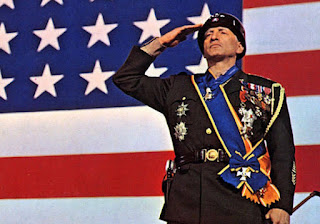
56 of 94. Patton (1970) Another film pulled along by an all-consuming performance, this time by the incomparable George C. Scott as General Patton. A fascinating biopic of a complex and controversial figure. 
 

55 of 94. Going My Way (1944) A pleasant and relaxing comic-drama from a time when the most controversial Catholic priest in cinema was Bing Crosby singing 1940s pop standards in order to keep street kids out of trouble (how edgy!) It's not a big or especially showy film but I love this one for Irish character actor Barry Fitzgerald's performance as the amusingly inflexible Father Fitzgibbon.


54 of 94. Green Book (2018) I feel dirty placing this so high... it's a bit on the nose and misjudged with its incredibly ripe use of the 'white saviour' trope. The performances of Mahershala Ali and Viggo Mortensen are so engaging that I still enjoyed it a lot despite its flaws. Mortensen really transformed himself. 


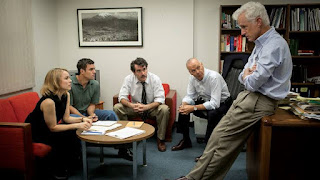
53 of 94. Spotlight (2015) A film as much about journalism as it is about real life institutionalised abuse. For a movie essentially about a bunch of people doing research it's surprising how compelling and by-the-seat-of-one's-pants it is. I kept expecting the film to push into more conventional narrative directions but writer-director Tom McCarthy stays true to the material and manages to keep it razor-sharp. 


52 of 94. The Best Years of Our Lives (1948) Groundbreaking in its depiction of PTSD in the post-WWII context. The Best Years of Our Lives is worth watching especially for real life veteran and double-amputee Harold Russell, one of only two non-actors to ever win an acting Oscar. 


51 of 94. Amadeus (1984) I was obsessed with this film in my early 20s... such a rich, vibrant study of jealousy and of the nature of talent. F. Murray Abraham gives a star-making turn as the resentful Salieri.
 

50 of 94. It Happened One Night (1934) Fast, funny, screwball, road movie romance of opposites attracting. Gable and Colbert were both megastars for a reason. Claudette Colbert in particular gives a great comic lead performance. Hard to fault this early Frank Capra classic!
 

49 of 94. The Life of Emile Zola (1937) Affecting biopic of a controversial historical figure whose persecution highlighted Europe's longstanding anti-Semitic attitudes. Great performance from actor's actor Paul Muni (a young Robert De Niro idolised him). Also an interesting film in the sense that it focused on and pushed through issues that the American censorship board was very much not comfortable with at the time.
 

48 of 94. All About Eve(1950) Marvellously catty drama of stardom and ambition. Great supporting coded performance from George Sanders.


47 of 94. The King's Speech(2010) Well-acted, well-scripted, and genuinely moving dramatisation of recent British Royal history. Also just a great story, and a film that brings history to life while managing to have a wide appeal to audiences. The unshowy but assured direction gives The King's Speech a timeless quality that means it will be very watchable for many years to come. 


46 of 94. Gentleman's Agreement (1947) One of the early 'social issue' pictures that broke new ground in Hollywood by looking at anti-Semitism directly (during the aforementioned 'Hays Code' era [1933-1960], a time of heavy censorship). Good performances; earnest and engaging.


45 of 94. Ben-Hur (1959) The epic to end all epics. William Wyler's classic biblical adventure still thrills and astounds with great action set pieces (like the famed chariot race) and a strong moral core. Charlton Heston holds the screen like few others and would come to exemplify 'the Epic' like few other actors thanks to his work in this film. 


44 of 94. The Last Emperor (1987) Like Amadeus, this was another '80s film that I was obsessed with in my early 20s. A beautiful, elegiac study of a civilisation's decline, and the only English language movie to ever film inside China's Forbidden City. It looks amazing, plus I'm a bit of a sucker for Chinese history - I just find it fascinating.


43 of 94. Wings (1927) One of only three silent films to win Best Picture. Wings is a romantic WW1 epic that holds up surprisingly well thanks to impressive (and death-defying) practical effects and pre-Hays Code humour. Watch out for an obnoxious subtext though!


42 of 94. Rebecca (1940) Alfred Hitchcock's first Hollywood film and - amazingly - his only Best Picture win. Rebecca is a suitably tense adaptation of the classic gothic novel, though it does bowdlerise the lesbian undertones of the novel. Laurence Olivier and Joan Fontaine are great in their leading roles. 


41 of 94. Nomadland (2020) A timely and insightful portrait of displacement and poverty among ageing women in the Western world. Frances McDormand is the perfect foil for America's haunting post-Route 66 landscapes, and both absorbs and reflects the ambivalence of her character's situation.


40 of 94. Mutiny on the Bounty (1935) The best of the three major film versions of this story. Charles Laughton is the greatest Captain Bligh, and this film still holds up nearly 90 years later as a great blend of history and character-led drama.  


39 of 94. Sunrise (1927) One of the times the Academy got it right. With Sunrise, the Oscars recognised a groundbreaking piece of art when it was first released (rather than retrospectively). Sunrise frequently appears on critics' Top 10 Films of All Time lists for good reason. Visually dazzling, morally complex and ambiguous, and something that resonates all through the ages - Sunrise is an astounding film that stands as testament to the inventiveness and creativity of the silent film era. 


38 of 94. Platoon (1986) A potent and visceral memoir of the Vietnam War experience as directed and written by veteran-auteur Oliver Stone. One of the times America took a long, hard, bitter look at one of its biggest mistakes. Unforgettable.


37 of 94. Twelve Years a Slave (2013) Hard to believe that it took until 2013 for the first black-centred and black-authored U.S. slave narrative to make its way to the screen. Steve McQueen brings this painful piece of foundational history to life with expert craftsmanship and a sure eye for detail. Perfectly pitched. 


36 of 94. Marty (1955) In an era of glamour and square-jawed studio stars, the sincere realism of Ernest Borgnine's friendly butcher Marty really stands out as a welcome slice of authenticity. There's something universal about this 'little' story of a bachelor's once-in-a-lifetime shot at love and happiness. It must have been surreal for people in 1950s America to see something much closer to their own lives on the screen than the usual polished Golden Era studio stories they were accustomed to. The writing and acting of Marty both transcend their time.


35 of 94. The Lord of the Rings: The Return of the King (2003) Let's be honest, this represents Peter Jackson's entire Lord of the Rings trilogy. This was a big event at the time. The special effects have dated remarkably quickly but the power of the adaptation hasn't diminished.


34 of 94. A Man for All Seasons (1966) Paul Schofield, a master-thespian in one of his rare screen appearances, dominates this compelling adaptation of the play of the same name (in which he originated the leading role). As a dramatisation of Sir Thomas More's ideological defiance of King Henry VIII, it's hard to think of how this could have been sharper or classier.    


33 of 94. No Country For Old Men (2007) Hard-boiled neo-noir / neo-Western from the Coen Brothers at their peak. There's a certain vicarious joy in watching everything unravel as Javier Bardem's mesmerising psychopath stalks the screen as a modern-day Angel of Death. Great performances from Josh Brolin, Kelly Macdonald, and Tommy Lee Jones as well. 


32 of 94. From Here to Eternity (1953) All-star account of American soldiers in Hawaii and the unexpected Japanese attack on Pearl Harbor that heralded U.S. entry into WWII. Iconic and unforgettable (that beach scene between Burt Lancaster and Deborah Kerr! Montgomery Clift in an Oscar-nominated performance! Frank Sinatra in his breakout dramatic acting role!), and one of the great classics of Golden Era Hollywood. 


31 of 94. Lost Weekend (1945) One of the first great Billy Wilder films (he has many, one of which turns up further down this list). Lost Weekend pushed the envelope on appropriate film content in the 1940s while combining wit with substance. Ray Milland's role as the hapless alcoholic at the film's centre was the highlight of his career. 


30 of 94. Gone With the Wind (1939) There aren't many films that do what Gone With the Wind does or do it as well... it's a romance, a war film, a historical epic. Most of all it's a powerhouse vehicle for both Vivien Leigh and the majesty of early technicolor. 


29 of 94. The Apartment (1960) Billy Wilder's mature dramedy features Shirley MacLaine and Jack Lemmon at their best. You have to read between the lines to understand the full extent of what these characters mean to each other, and the events that are taking place. A memorable fable for the modern age and a film that helped signal the end of the Hays Code. 


28 of 94. Braveheart (1995) It's one of the most historically inaccurate films ever made and is an incredibly manipulative piece of filmmaking, but I also watched it endlessly as a teenager and I love Patrick McGoohan (who plays the villainous King Edward Longshanks). I remember being 15 and going off to research the figures from this film, only to find out how weirdly distorted Mel Gibson's version of events was. I loved finding out the real history for myself so, in a way, this film helped start my journey in eventually becoming a History teacher! Anyway, Braveheart is a great 'popcorn' flick, as they say.


27 of 94.
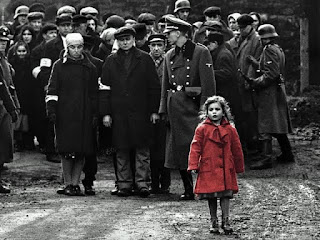
Schindler's List (1993) It would be hard to not know what this film is or what it's like, such has been its ubiquity whenever someone discusses Holocaust cinema. And for good reason. Steven Spielberg was already a technically-ambitious director when he attempted Schindler's List but had only delved into the realm of more serious dramatic fare once or twice. This resulting film was (and is) unforgettable and searing.


26 of 94. In the Heat of the Night (1967) The archetypal progenitor of the 'cop-uncovers-ongoing-racism in the Deep South' crime subgenre. Still compelling 50 years later thanks to the acting of Sidney Poitier and Rod Steiger as the odd couple police officers brought together by a murder case.


25 of 94. The Departed (2006) A sprawling Boston mob saga of stressed loyalties and deep cover. I actually prefer Scorsese's grandiose streetwise version to the stripped-back Hong Kong original (the minimalist Infernal Affairs). The Departed also gets points for its use of the songs 'Gimme Shelter' and 'Shipping Up to Boston'. 


24 of 94. The Shape of Water (2017) It's rare to see fantasy films recognised at the Oscars but Guillermo Del Toro's fable of 'otherness' couldn't be more deserving. A compelling portrait of love, marginalisation, and empowerment - also full of humour and humanity. 


23 of 94. Gladiator (2000)
Before Lord of the Rings and Marvel, Ridley Scott was the first to redefine the blockbuster for the 21st century with this unexpected return to the spectacle and splendour of the 'Sword and Sandals' epic. Joaquin Phoenix's Commodus is an entertaining proto-Joffrey.


22 of 94. Rocky (1976) For better or worse, without Rocky we wouldn't have about 200 boxing, sports, rags to riches, or Sylvester Stallone films. Sequel-heavy legacy aside, Rocky remains a charming and invigorating 'small' movie of one man against the odds. 


21 of 94. Rain Man (1988) There are some elements that are problematic but I find it hard to dislike Rain Man. For many it was the first time autism (or something like it) took centre-stage in mainstream cinema. Dustin Hoffman and Tom Cruise make a surprisingly watchable duo. 


20 of 94. Casablanca (1942) A great WWII noir-ish romance set in the shadows of Nazism. Endlessly quotable, memorable performances, and still admirable for its strong anti-fascist message. 


19 of 94. American Beauty (1999) This film signalled the end of the '90s and all that the nuclear family had endured in the name of pop culture up until that point. The Burnham family's schadenfreude-like collapse fuels an engaging tragicomic-drama filled with arresting characterisations, darkly funny performances, and memorably subversive scenes. Let's just not talk about Kevin Spacey. 


18 of 94. Moonlight (2016) A beautiful and delicately tense film that's more groundbreaking than most people realise (note that it doesn't end in tragedy or heartbreak like a lot of LGBT-centric representations in mainstream cinema throughout the '90s and '00s). Mahershala Ali's supporting role is loaded with so much symbolism... I found this film riveting from start to finish. 


17 of 94. Dances with Wolves (1990) Not the best of the 1990 nominations (I'd have awarded Goodfellas) but the one that won and, as such, still a great film worthy of attention. Dances with Wolves is a flawed yet moving epic in the David Lean mode, and one of only three Westerns to win Best Picture. Its imagery and tragic undertones resonated with me for a long time in the '90s! 


16 of 94. Midnight Cowboy (1969) Same old story of a country boy who comes to New York, falls on hard times, becomes a prostitute, and befriends a decrepit street survivor. Dustin Hoffman is perfection as the proto-Costanza outcast Ratso Rizzo. Disturbingly memorable - but the most shocking thing about Midnight Cowboy is probably that the Academy was courageous enough to give it the Best Film award. 


15 of 94. Gandhi (1982) It's not an envelope-pushing film but I place it so highly in this list because it's a great story well-told. There's an art to doing cinematic justice to a historical figure like Mohandas Gandhi, and Gandhi is easily one of the best of the biopics that the Academy has awarded. 


14 of 94. Forrest Gump (1994) It's hard to overstate how massive Forrest Gump was in 1994. Suspect political subtext aside, it's a very fun film with some still-amazing special effects. Tom Hanks sells the character so completely, and the irreverent tour of the American 20th century is undeniably entertaining. 


13 of 94. All Quiet on the Western Front (1930) It would be a long time before Hollywood experienced an anti-war film quite like this again. The Hays Code that came into full effect about 3 years after All Quiet on the Western Front, making it impossible for films of this thematic nature to be put on the screen (at least this explicitly) until about 1960. The message holds up... it's still perhaps the most haunting and authentic WWI film. 


12 of 94. Unforgiven (1992) Brutal, uncompromisingly revisionist Western in which Clint Eastwood deconstructed both his own image and the myth of the old West. Complexly layered and visually arresting.


11 of 94. Parasite (2019) I think about this movie a lot. I'm still thinking about it now. Such a hypnotic mix of social commentary, humour, suspense... Bong Joon-ho also creates perfect mise en scene - the sequence where the family's hovel fills up with floodwater is incredible. 
 

10 of 94. The French Connection (1971) The gritty '70s cop thriller to which all subsequent alike films owe a massive debt. Gene Hackman's Popeye Doyle is one of the great indelible anti-heroes of cinema. Intense and darkly electric, and featuring an all-time great car chase.
 

9 of 94. On the Waterfront (1954) Elia Kazan made this film for a shitty reason but Marlon Brando's characterisation of Terry Malloy saves it. Brando's method-work here is one of the most influential performances in all of cinematic history, and he surprises in so many subtle ways. Brando is so good in this that he singlehandedly pushes On the Waterfront into the Top 10.


8 of 9. Lawrence of Arabia
(1962) Another film built around a towering performance, this time it's Peter O'Toole offering a morally complex and ambiguous characterisation amidst David Leann's grand WWI-adjacent desert scenery. A truly unforgettable experience.


7 of 94. Birdman (2014) Absolutely incredible, and finely acted by everyone in it. Sometimes I think that everything that can possibly be done in film has already been done, but Birdman defied my expectations on multiple levels. It's one of those films where I couldn't get my head around how they actually made it. Incomparable. 


6 of 94. One Flew Over the Cuckoo's Nest (1975) Institutionalisation, conformity, individuality, authority, freedom... this thematically-rich modern fable is one of the great pieces of American cinema. It also features the archetypal Jack Nicholson role. 


5 of 94. The Silence of the Lambs (1991) Much is made of Anthony Hopkins as Hannibal Lector but that's not the only reason why this film remains one of the greatest psychological crime thrillers ever made. Silence of the Lambs is perfectly constructed, eerily creepy, and also features Jodie Foster in top form.


4 of 94. The Godfather Part II (1974) Francis Ford Coppola made lightning strike twice with this - the best sequel ever made. The Godfather II adds to the themes of the first film in new and meaningful ways. It also features Robert De Niro in his breakout star-making role, and presents an unconventional and compelling dual narrative. Hard to place at number 4 on this list - could be higher on some days!


3 of 94. The Deer Hunter (1978) Few films about PTSD, the far-reaching impacts of war, and the lives of the working class pack the same visceral and emotional charge as The Deer Hunter. Few films have scared me as much as this film's infamous Russian roulette scenes. 


2 of 94. The Bridge on the River Kwai (1957) David Lean's POW film expertly balances character-based conflict with action, adventure, and the ambiguities of war. Cue Alec Guinness in his Oscar-winning performance with that fantastic final line... I love this film so much. 


1 of 94. The Godfather (1972) And here's my Number 1. I looked hard at the list and considered the way in which my taste has changed over time, the changing nature of cinema itself, and I still couldn't go past The Godfather. I've watched it dozens of times and it never ceases to impress me. It's a beautiful, operatic meditation on the corruption of the American dream, and it features so many great scenes and performances. It's perfect cinema.