A Guide to this Blog

Showing posts with label Maoism. Show all posts

Sunday, June 18, 2017

Significant Figures: China 1966-1989

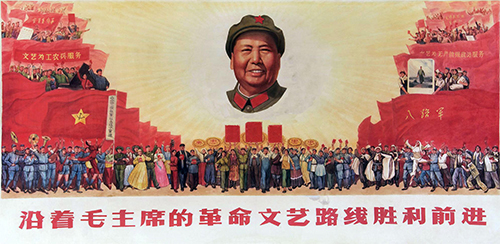
Mao's cult in full force
To Western eyes, the leadership of the Chinese Communist Party (and China itself) is not as clearly defined as the heads of state in our own countries. When teaching Change in the Modern World, Option B: Cultural Revolution to Tiananmen Square 1966-1989 to Modern History students we need to be mindful that they may make certain assumptions based on their own inherent sociocultural biases. Yes, Mao Zedong was Chairman of China from 1945 to 1976, but his most famous successor, Deng Xiaoping, did not occupy this position at all. It would be easy, as a citizen of a country with a Western-styled government, to assume that Deng Xiaoping and Mao Zedong occupied the same positions as overall leaders of China. This is not, however, the case.

The informal term for political leader of the Chinese government is 'Paramount Leader'. It is accurate to say that Communist China had 4 clear paramount leaders between 1966 and 1989, the time period of the study.

They are:

Mao Zedong: Chairman of various posts until 1976.

Hua Guofeng: Chairman of the Central Military Committee until 1981, but only considered leader of the nation until 1978 (when he lost his position as Chairman of the Central Committee).

Deng Xiaoping: Although Deng did not take over directly from any of Hua Guofeng's positions, he did start leading the Consultative Conference National Committee from 1978, signalling his movement into a higher point of influence at that time. He took over from Hua as Chairman of the Central Military Committee in 1981.

Jiang Zemin: Jiang ascended to the role of General Secretary of the Central Committee in 1989, which placed him as the new paramount leader after the Tiananmen Square incident on June 4th.

You'll notice what seem like a few discrepancies in the above information. We all know Mao Zedong as the 'Chairman' of China, however, this is actually a simplification of his full role within the Communist Party of China. At various points, Mao occupied up to 6 positions as Chairman of different branches within the Party and the government. Most of these he rescinded by the end of the 1950s, keeping only the positions of Chairman of the Central Committee and Chairman of the Central Military Committee, which were almost honorary titles by the time of his death (he kept these titles whilst day-to-day power transferred to other roles within the party, which goes some way towards explaining how the most powerful person in the Party could occupy completely different political positions to their predecessors).

"Follow Hua!"
Hua Guofeng was Premier of the State Council, but it was his succession of Mao as the Chairman of the Military Committee (meaning he had control of the People's Liberation Army) that saw him elevated to paramount leader above his peers. This is where things get tricky though, as Deng Xiaoping was undoubtedly the leader of China from 1978 to 1989, despite not occupying any of the key positions of power in the Party of government during that time. Deng was not General Secretary, Premier, or even President of the Party/government. Nor did he become Chairman of the Central Military Committee or Chairman of the Central Committee at any point. Instead, Deng consolidated power through his command of the Central Military Commission, the Consultative Conference Committee, Central Advisor Committee, and as Vice Premier of the State Council.

Deng's successor, Jiang Zemin, held a more traditional bastion of power as General Secretary and Chairman of the Central Military Committee, and this is how the following paramount leaders have established their power since this time.

Pretty dry stuff.

The point for our students to take away from this is that, in the context of a single party political system, the lineage of power does not transfer through a voting system or structured hierarchy. Power is accumulated through the prior paramount leader unofficially 'handing the reigns over' to the new leader through increased association and endorsement, and also by brokering the support of large factions within the Party who hope that the new leader will support their agendas.

Something else to consider is the unofficial designation of 'Party Elders', retired members of the Communist Party who retain a significant degree of influence through largely tokenistic positions (an example is Deng Xiaoping, who still exerted a lot of power well into his 90s despite only occupying a position as Honorary Chairman of the China Bridge Association ['Bridge', as in the card game Bridge]). After Deng's exit, the occupation of leadership became more structured with all three subsequent leaders concurrently occupying the three positions of General Secretary, President, and Chairman of the Central Military Commission.

Other Factors in Understanding Significant Figures
The side story to these four leaders is the narrative of those who also attempted to broker power between 1966 and 1989. The ones that are relevant to the syllabus dot points are:
  • Liu Shaoqi
  • Lin Biao
  • Jiang Qing (AKA 'Madame Mao') and her supporters (together known as the 'Gang of Four').
Liu Shaoqi was designated by Mao as his successor as early as 1960, however, ideological tensions arose between the two figures after the Great Leap Forward, leading Mao to denounce his political protege. A large part of the Cultural Revolution consisted of the resulting power struggle between Mao and Liu, with Liu removed from all political positions and placed under house arrest by 1967. He died in mysterious circumstances in 1969, from alleged pneumonia.

Lin Biao rose in the wake of Liu through his loyal support of Mao's ideology during the Cultural Revolution. In 1969 he was acknowledged as Mao's new successor as the next paramount leader but this favouring was short-lived. Lin's control of the People's Liberation Army grew during the Cultural Revolution to a point that threatened Mao's sense of security. Tensions arrived at a point that saw Lin actively avoid coming to Beijing for Party meetings, and Mao removed him from the Party altogether by 1971. Lin attempted to flee China with his family by plane and died when it crashed in Mongolia. The official line is that Lin attempted to orchestrate an assassination attempt on Mao, had failed, and was now fleeing to the Soviet Union for safety. Another perspective is that the alleged assassination attempt was invented by Mao and his cronies to support the disposal of Lin.

Jiang Qing became the scapegoat of the Cultural Revolution as the de facto head of the 'Gang of Four'. As the most radical faction within the Party, and vehement opponents of China's westernisation and/or modernisation, the Gang of Four were blamed by Hua, Deng, and other Party members for all the ills and crimes of Mao's reign after his death, conveniently allowing for Mao's legacy to remain largely untarnished while Jiang (his wife) became the scapegoat. 

Propaganda depicting children "smashing" the Gang of Four
Two other Chinese political figures of importance to the Option B syllabus are:
  • Zhou Enlai (mentioned in the dot points)
  • Zhao Ziyang (not mentioned in the dot points but instrumental to our understanding of the protests that led into the Tiananmen Square incident of 1989).
Zhou is best understood as the loyal Party member responsible for launching the 'Four Modernisations' that characterised Deng's reign, and for building peaceful ties between China and the rest of the world during a very turbulent time for the nation. He was very popular with the Chinese people, and his struggles against the Gang of Four helped turn public opinion against Jiang Qing, especially after his death at the end of the Cultural Revolution.
Zhao was also a later Party member who was also popular with the Chinese people. In the 1980s, he supported the increased privatisation and westernisation of the Chinese economy, which culminated in his public support of the Tiananmen Square protestors in 1989. Zhao opposed the Party's decision to declare martial law in order to quell the protests in Beijing, on the grounds that making such a decision without an internal vote was constitutionally illegal. Zhao found himself expelled from the Party by Deng and placed under house arrest for the next 15 years.

Students will need to also have tertiary / passing understanding of Soviet leadership as the historical narratives of the USSR and China intersect at several points in relation to the syllabus dot points for Option B. These leaders are:
  • Joseph Stalin
  • Nikita Krushchev
  • Mikhail Gorbachev
Without getting too much into irrelevant information, these three figures relate to China's story in the following ways:

Joseph Stalin: Stalin's Cult of Personality has some clear and relevant parallels to Mao's own cultivation of a godlike status in China, and helps establish some context for the tensions that arose in the 1950s and '60s both between China and Russia, and within the Chinese Communist Party itself. The CCP's amendments to the Chinese constitution took out all references to Mao, mirroring Russia's own process of de-Stalinisation during the mid-1950s, which only served to antagonise This political decision (in both countries) was designed to deconstruct the phenomenon of the 'cult of personality' that had arisen in China and the USSR respectively.

The split in Sino-Soviet relations also has some origins in Stalin's lack of support for China following Mao's establishment of CCP leadership in 1950.

Nikita Krushchev: Krushchev's relaxation of Russia's more Stalinist elements of communism in the 1950s was interpreted by Mao as a threat to the Marxist concept of permanent revolution. This led, in some part, to the increased adherence of the CCP to Maoism as a clear alternative to what Mao interpreted as dangerous revisionism on the Soviet Union's part.

Krushchev's actions during the Cold War were also interpreted as 'soft' and revisionist by the Chinese. 

Mikhail Gorbachev: Gorbachev's part in our story comes much later when he visited China in 1989, prompting, in some part, the Tiananmen Square incident. It will be necessary for students to understand what Gorbachev came to symbolise for those in the Chinese pro-democracy movement. As the Russian leader of the Communist world, Gorbachev was making moves towards the dismantling of socialism (and the Soviet Union) through his introduction of glasnost and perestroika, policies of 'openness' that would lead to the increasing westernisation of the USSR. His visit to China in 1989 was to involve a tour of Tiananmen Square, hence the choice of this location as ground zero for the Chinese protestors.

Resource - Key Figures Timeline

Saturday, June 10, 2017

Sino-Soviet Split and Anti-Revisionism in the 1950s and 1960s

Mao Zedong and Nikita Khrushchev, 1958
In order to gain a full understanding of how Mao Zedong developed his own distinct brand of communism, otherwise known as 'Maoism' or 'Mao Zedong Thought', it will be useful for students to see what led to the split between the world's two largest communist nations. This historical narrative of cause and effect can be traced back to the 1920s, when Lenin consolidated the Bolshevik governance of Russia and established the world's first socialist state. 

A good place to start with orientating students in regards to this is to have them look over the following text and create a mindmap of reasons for the Sino-Soviet split.

Sino-Soviet Split and Anti-Revisionism
From its formation in 1921, the Chinese Communist Party had relied on Soviet political and financial support. Both countries aimed for 'permanent revolution' - an ongoing class struggle that would eventually transform the world into a single, unified communist society without national borders.

The first cracks in the Sino-Soviet alliance began to show in the Chinese Civil War of 1945-1949 when the CCP were battling the Nationalists (the Kuomintang) for control of China. Stalin advised the CCP to stop after taking the north of China as he did not have faith in the their ability to transform all of China into a communist state, and he held back any real support from the CCP during this time because he preferred China to be divided and weakened; a less-threatening neighbour for the USSR to deal with. He even condescendingly referred to the Chinese as 'cabbage communists', viewing them as incapable of true Marxism in comparison to the Soviet Union.

China and the Soviet Union also disputed access and ownership of the Xinjiang region that sat between them, with both wanting its rich mineral resources. Mongolia was similarly disputed, with China only able to claim 'Inner Mongolia'. The rest of Mongolia became a satellite republic under the influence of the Soviet Union. During WWII, when Japan invaded China, the Soviet Union only offered China assistance very late in the war, and even plundered northern Chinese factories for their own gain. 

Towards the end of the 1950s, the Russian leader Nikita Khrushchev gave a speech in which he outlined his wish for a peaceful coexistence between the East and the West. Mao was unimpressed as he saw this as contradicting the theory of permanent revolution, and China had been treated badly by the West in the recent past. Khrushchev's criticism of the previous Soviet leader, Stalin, also threatened Mao's own image (as he had styled himself as a similar kind of leader - worshipped by the masses). In 1957, Mao visited Moscow and encouraged the Soviet Union to assist other countries in their own revolutions, which the Russians ignored. He outlined his own plan to 'liberate' Taiwan, which frightened Khrushchev, who thought such warmongering would lead to worldwide nuclear warfare. The Chinese saw this fear as weakness and a betrayal of the permanent revolution.

In 1958, China began to attack Taiwanese forces. Khrushchev travelled to Beijing to try to intervene, and offered to place Soviet missiles on Chinese soil as a compromise (but would not share atomic technology). Mao refused, offended by the Soviet Union's attempts to dictate what China should do. When Khrushchev visited Russia's Cold War enemy (the United States of America) in 1959, Mao saw it as a further weakening of Soviet supremacy, and began to question Khrushchev's understanding of Marxism. Mao was angered further when Russia sided against Mao over China border disputes with India. 

In 1960, Russia withdrew all diplomats from China and cancelled 300 industrial and economic contracts. The Soviets offered economic aid to India, and China began to characterise the USSR and USA (enemies of each other in the Cold War) as one and the same: hypocrite revisionists and capitalist enemies. Things dropped to an all-time low in 1968, when China and Russia clashed over control of an island in the Ussari River near their border, with up to 200 soldiers killed. Around this time, Mao began to label enemies of the Chinese state as 'revisionists' and 'Chinese Khrushchevs'.

Chinese soldier photographed during the Ussuri River conflict, 1969. This incident lasted for 7 months and is most commonly known as the 'Sino-Soviet border conflict' or, in China, as the Zenbao Island Incident.
Reasons/Evidence
Students should be able to pull the following causes out of the above text:
  1. Stalin discouraged Mao from taking all of China during the Chinese Civil War.
  2. Stalin did not lend any real financial or military support to the Chinese communists during the Civil War.
  3. Both the USSR and China were in dispute over control of the Xinjiang region for its minerals/resources.
  4. The USSR kept hold of Mongolia as a 'buffer zone' between themselves and China.
  5. The USSR lent very little assistance to China when Japan invaded in 1937.
  6. The USSR used WWII as an excuse to plunder Chinese factories in the north.
  7. Nikita Khrushchev criticised Stalin and his 'cult of personality', which did not sit well with Mao, who had his own cult of personality.
  8. Khrushchev also began to build a relationship with the West, which Mao saw as a contradiction of Marxist ideals.
  9. The Soviet Union was disinterested in assisting other smaller nations with their own Marxist revolutions.
  10. The USSR discouraged China from pursuing war with Taiwan, and would not lend atomic technology to Mao.
  11. Khrushchev feared that Mao would provoke nuclear war and tried to directly intervene by visiting Beijing.
  12. Mao saw Khrushchev's visit to the USA as a sign of weakness.
  13. The Soviet Union sent assistance to India when China and India entered into a border dispute.
  14. The USSR withdrew all diplomats and contractors from China in 1960.
  15. The USSR and China battled each other for control of an island in the Ussari River.
Extension/Consolidation:
Tie the above understanding to the ideology dot points in the syllabus by asking students to consider the following essay-style question. Students are encouraged to use the above to establish some apparent key differences in Soviet Marxism and Maoist Marxism.

To what extent is the Sino-Soviet split a result of competing versions of Marxism?

Saturday, May 20, 2017

Building the Field: China 1966-1989

Red Guards read from Mao's 'Little Red Book' during the Cultural Revolution

A key aspect of increased capacity for engaging with knowledge is better literacy. If we want to be able to express our thoughts on a specific subject then we need to be equipped with the vocabulary that will allow for full interaction with the topic at hand. In other words, in order to find the nuance in meaning that permits for increasingly sophisticated discussion of an idea the responder needs to have advanced literacy skills.

It's easy to think of grammar as commas, full stops, and capital letters, but grammar goes well beyond this in terms of structuring our understanding of language. Our command and understanding of grammar is a significant building block for our cognitive ability; it's our ability to organise information into a taxonomy of terms demonstrating relationships between words and concepts that increases the individual's capability for dealing with new concepts and content. 

Getting more specific, there are three extralinguistic features that contribute to our understanding of a context surrounding a new text when we read it. These are:
  • Field: What is being talked about or written about (the content)
  • Mode: The nature of the text and the role language plays within it (how the content is being delivered - spontaneously? planned? written? televised?).
  • Tenor: The relationship between the speaker/listener or reader/writer (does the composer treat the reader as a novice, an equal or an expert? What kind of language is being used to achieve this?)
When we have students engaging with a previously unfamiliar area of knowledge, such as the new Modern History HSC syllabus China option for Change in the Modern World, the students will need to 'build the field'. Arriving at a point where students can communicate sophisticated historical ideas is dependent on their understanding of the history in question. They will need to build a specialised lexicon that includes all the new terms that they will be coming into contact with, and creating this new vocabulary bank will be the base from which they can draw upon when formulating their responses.

There are several ways that the field can be built. One tried-and-true way is a glossary, which I've included below, but reading new words and their definitions isn't a particularly effective way to learn something. The research tends to suggest that students will have a better time with new terms if they put them into practice immediately. This means that new words should be introduced gradually, with students trying them out in sentences of their own construction. 

Another effective method is giving the reader a piece of text that includes several unfamiliar terms and having them monitor the piece with the highlighter. Students locate and highlight the new terms and decode them one by one, with the teacher's assistance, in order to increase their knowledge of the context around the text.

Anyway, here's an overview of the vocabulary a student should become familiar with during the course of their study of Change in the Modern World, Option B. As mentioned, it's best to introduce these gradually and in context.

Anti-Revisionism: The maintenance of communist ideals in China. Those who sought to compromise Marxist ideology were accused of 'revisionism', and anti-revisionism referred to the need for Chinese communists to fight against this.

Bourgeoisie: The middle class. In Marxist theory, the 'bourgeoisie' are the capitalist class who seek to get rich off the labour of the workers. Marxists aimed to remove the bourgeoisie element from society.

Capitalism: A system of government, or society, in which the goal of the individual is to accumulate wealth for themselves. Trade is controlled by the private sector, rather than by the government.

Capitalist Roader: A synonym for 'revisionist'. Those in communist Chinese society seen as taking the easy 'capitalist road' were derogatorily labelled 'capitalist roaders'.

Cold War: The international tension (1947-1991) between the communist East (led by the Soviet Union) and the capitalist West (headed by the United States of America). Although communist, China did not fit neatly into the Soviet Union's side of the conflict as the two neighbouring Marxist countries had their own unresolved tensions during this time.

Counterrevolutionary: Internal enemies of the Chinese communist state were labelled as 'counterrevolutionary' as their actions were interpreted as running contrary to the spirit of the Chinese communist revolution.

This propaganda poster literally depicts Chairman Mao as the sun that lights all of China
Cult of Personality: This occurs when a person in a position of authority (such as Mao Zedong) creates a political atmosphere in which they are worshipped as a godlike figure by the general population. See any of the many artworks produced between 1950 and 1976 that depict Chairman Mao as a benevolent father-figure to the Chinese people (such as that above).

Cultural Revolution: A movement that occurred between 1966 and 1976, in which Mao Zedong encouraged students and workers to rise up and rid China of revisionist and counterrevolutionary elements.

Dazibao: Chinese for 'Big Character Poster'. These are large handwritten posters used to protest, communicate propaganda, and express ideas. These were popular during both the Cultural Revolution and in the late 1970s Democracy Movement.

De-Stalinisation: In 1956 the new Russian Chairman, Nikita Khrushchev, began a process of deconstructing the cult of personality that had surrounded the previous Chairman, Joseph Stalin.

Feudalism: A medieval form of government in which landowners controlled the state, with peasants or serfs working the land in exchange for being allowed to live on said land. Much of China was still a feudal state by the mid-20th century.

Four Olds: Mao Zedong ordered the Red Guards of the Cultural Revolution to destroy the 'four olds' so that China could be rebuilt anew. These were: old thought, old culture, old customs, old habits. This resulted in much of China's ancient heritage being destroyed to make way for a new and modern communist China.

Four Modernisations: A program launched by Zhou Enlai in 1975 to assist with China's progress towards increased industrialisation. These modernisations were: Agriculture, Industry, National Defense, and Science/Technology.

Fifth Modernisation: A dazibao in 1978 that called upon the Chinese Communist Party to add 'Democracy' as a fifth aspect of the Four Modernisations.

The Gang of Four were blamed for all the horrors of the Cultural Revolution
Gang of Four: A radical faction within the Chinese Communist Party headed by Jiang Qing (Mao Zedong's wife). The Gang of Four opposed efforts to modernise China as they saw it as the 'poisonous road to capitalist restoration'. After Mao's death, the Gang of Four attempted to seize power but instead found themselves denounced and arrested as enemies of the state. 

Gerontocracy: A government ruled by the elderly. Protestors against the Chinese government in the 1980s derogatorily labelled Deng Xiaoping and other senior members of the Chinese Communist Party as a 'gerontocracy'.
Glasnost: A policy promoted by the Soviet Chairman, Mikhail Gorbachev, in the 1980s. This policy loosely translates as 'openness' and was characterised by the loosening of strictness in communist Russian society. 

Industrialisation: Widespread development of modern industries in a country.

Leftism: Political views or policies of the 'left' (those who identify with communism, Marxism, and socialism).

Liberalisation: The process of allowing increased freedom in Chinese society. Many members of the Chinese Communist Party in the 1980s feared that liberalisation would interfere with socialist progress.

Liberalism: The idea of a society founded on freedom, particular in regards to equality, free trade, and freedom to pursue personal wealth.

Marxism: A political system based on the teachings of Karl Marx, the philosopher who invented the theory of communism.

Maoism / Mao Zedong Thought: Chairman Mao's own interpretation of Marxism could be found in his Little Red Book, and featured several key differences in comparison to the Soviet/Marxist version of communism. One main difference was that Maoism focused on role of the peasants in the maintenance of a communist society.

Modernisation: The process in which countries develop from a traditional or feudal state into something industrialised and up-to-date.

People's Liberation Army: The Chinese army, who assisted Mao in winning the Civil War that led to the creation of communist China in 1949.

Perestroika: Translates as 'restructuring'. Perestroika were the reforms that the Soviet Union underwent in the 1980s before transitioning away from communism.

Permanent Revolution: The idea that communist revolution was an ongoing struggle between the social classes, and would continue until the entire world had become communist. Also links to the idea that Marxist societies, such as China, had to continue revisiting Marxist ideals in order to ensure that they stayed true to the spirit of communism.

Plenum: A political meeting in which all controlling members of the Chinese Communist Party had to be present.

Proletariat: The working / peasant class of a society.

Millions of Red Guards made the pilgrimage to Beijing to see Chairman Mao during the Cultural Revolution

Red Guards: The students encouraged by Chairman Mao to spearhead the Cultural Revolution were dubbed the 'Red Guards'. These students numbered in the millions and became fanatical devotees of Chairman Mao and his Little Red Book, vowing to fight those who wanted to bring capitalism to China. 

Rehabilitation: Enemies of the Cultural Revolution were sentenced to 'rehabilitation'. This often consisted of several years of forced labour that would teach capitalist roaders and revisionists how to be communist again.

Revisionism: Those who wanted to 'revise' communist society in China and allow increased freedom, or accumulation of personal power. These elements of Chinese society were criticised as 'revisionists'.

Rightist: Political views or policies of the 'right' (those who identify with nationalist and conservative ideologies).

Stalinism: The ideology of Marxism as practised by Joseph Stalin in the Soviet Union. Stalinism was extremely totalitarian in its control of Russian society.

Struggle Session: Those identified as enemies of the Cultural Revolution was made to undertake 'struggle sessions', in which they had to denounce and criticise themselves for hours at a time so that they could start afresh as true communists. These sessions also meant humiliation and torture at the hands of the Red Guards and, sometimes, death.

Westernisation: The increased adoption of Western (American/European) and capitalist culture in China.