A Guide to this Blog

Showing posts with label Reviews. Show all posts

Sunday, January 7, 2024

The Best Films I Watched in 2023

I got into a bit of a routine in 2023 where I would watch a film most nights before bed. I didn't read as much as I normally do but I hit a real stride with movies and ended up watching 180 films. Here are the 25 best ones I watched.


Can You Ever Forgive Me 
directed by Marielle Heller (2018)
I love seeing actors play against type, or do work that accentuates their talents in such a way as to surprise the viewer. This describes both Melissa McCarthy and Richard E. Grant in this film, which is based on a really interesting true story about a writing hoax. Both actors are known for quirky or humorous roles and, whilst they bring this to these characters, they also add a certain dramatic weight to an unlikely partnership. Grant in particular has been an undervalued character actor for decades, so it's wonderful to see him given such a perfect part here - he went viral in early 2019 for his excited reaction video to getting nominated for an Oscar for this film. 


Decision to Leave 
directed by Park Chan-wook (2022). 
A Korean psychological thriller with compelling characters and heart-stopping twists. The meticulous narrative pulls you in and doesn't let go, not even after the film is done. An outstanding, beautiful crime-romance from the director of Old Boy.  


Diary of a Country Priest directed by Robert Bresson (1951). 
A young priest is assigned to a hostile village and finds himself caught between his beliefs and the nature of the job. Bresson's films don't usually gel with me but this one resonated as a haunting and thoughtful character study with a powerful ending. 


Lady Bird directed by Greta Gerwig (2017)
Gerwig's directorial debut is a coming-of-age tale buoyed by a powerful lead performance from Saoirse Ronan and a strong, witty script. Acid-sharp and a great addition to the bildungsroman genre.


Teenage Mutant Ninja Turtles: Mutant Mayhem directed by Jeff Rowe (2023)
I grew up loving TMNT and I think this new animated feature has done a brilliant job of capturing and reimagining the more anarchic qualities of the original comics. As many critics have noted, the turtles actually seem like real teenagers in this - and the rapport of the young actors successfully translates from their voicework to the film's distinctive animation style. Very entertaining and lots of fun. 


An Actor's Revenge directed by Kon Ichikawa (1963)
I'm a sucker for older Japanese cinema and stories of revenge. As a 1960s film focused on a sympathetic transgender hero in Edo period Japan, Ichikawa's film is such an unusual outlier that it demands to be seen. The unusual style memorably blends minimalist Kabuki theatre aesthetics with the more realistic staging of a film. A really interesting film that isn't like anything else in terms of its look or content. 


The Square directed by Ruben Ostlund (2017)
A razor-sharp satire of the modern art world. Subtle and clever, The Square has a dangerous edge to it and takes no prisoners. Between this and his more recent film, Triangle of Sadness, Ostlund is a filmmaker that I'm keen to see more of. 


Killers of the Flower Moon directed by Martin Scorsese (2023)
What a film. It's heartening to see that Scorsese, now 81 years old, still has such sharp and complex things to say through his chosen art form. Killers of the Flower Moon shines a light on a shameful facet of American history and features a compelling scene-stealing performance from Lily Gladstone.  


The Enigma of Kasper Hauser directed by Werner Herzog (1974)
The Enigma of Kasper Hauser was inspired by the real life mystery of a person who appeared in a 19th century German village and claimed to have grown up in isolation. Herzog's early film remains an intense and equally mysterious piece of cinema. At its centre is a bizarrely magnetic, hilarious, and downright unsettling performance by non-actor Bruno S., who breathes memorable life into the confused creature of the film's title.


Biutiful directed by Alejandro Gonzalez Inarritu (2010)
Javier Bardem truly is one of the greatest living actors in the world - in Biutiful he gives an effortlessly moving and understatedly humane performance as a flawed man struggling to survive and do the right thing. A film of feelings and senses, Inarritu beautifully photographs and brings to life Barcelona's underside. 


Where is the Friends Home? directed by Abbas Kiarostami (1987)
An eight-year-old boy undertakes a journey to a nearby village so that he can save a classmate from punishment. At heart it's quite simple and straightforward but the appeal of this film remains difficult to explain in words. I've read others describe it as 'poetic and gentle' and I think that's rather apt.


Barbie directed by Greta Gerwig (2023)
There's not much to say about Barbie that hasn't been said elsewhere. Barbie was a zeitgeist-defining moment for 2023 and, as far as I'm concerned, it was the film of the year. It did new things, had great and hilarious performances, and managed to be hugely popular and astoundingly weird for a mainstream film. 


Dogtooth directed by Yorgos Lanthimos (2009)
Dogtooth... where do I begin? This film carefully constructs a world of mesmerising family dynamics and strange rituals; it's left a lot of people scratching their heads but it's also very difficult to look away from. Lanthimos is now more famous for films like The Favourite, Lobster, and the recently released Poor Things. This Greek film, Dogtooth, was his breakthrough moment and it has the same frightening absurdism that has since made Lanthimos such a creative and unique voice in cinema. 


The Exterminating Angel directed by Luis Bunuel (1966)
A dinner party turns into a nightmare when the guests realise that they inexplicably can't leave the room. I'd seen a few early Bunuel films several years ago but The Exterminating Angel was something else - dark, twistedly funny, and thoughtfully subversive. I think what I enjoyed most about this film is the way that it starts quite normally and then very gradually becomes more and more insane. 


Past Lives directed by Celine Song (2023)
A modern fairy tale of unrequited love that deserves to sit on the shelf alongside other romance classics like Brief Encounter and In the Mood for Love. This film slyly suggests that our increased connectivity (created by social media) is having a profound impact on humanity in ways that we might not have considered. For example, the 'ones that got away' in our past are now forever within reach thanks to the internet. Past Lives ponders the question of whether that's a good thing or not. Greta Lee is wonderful in the lead role and deserves an Oscar nomination. 


Bottoms directed by Emma Seligman (2023)
Teen comedies are such well-trodden territory now that you'd be forgiven for thinking it's all been done. Bottoms successfully challenges this with a fresh new perspective from the creative team of director-writer Emma Seligman and actress-writer Rachel Sennott. Hilarious, subversive, and darkly-absurd. 


L'Avventura directed by Michael Antonioni (1960)
A woman goes missing on a day trip to a barren Mediterranean island and her partner falls in love with her friend while they search. Beautifully shot, tragically enigmatic, and bold in its rejection of traditional narratives. Like a lot of the films on this list, this one stayed with me for a long time after I watched it. If you've seen the second season of the TV series White Lotus, you'll recognise this as the inspiration for the creepy scene in which Aubrey Plaza realises all the men in the town are staring at her. 


Nope directed by Jordan Peele (2022)
I can't stop thinking about this film and everything it says. Nope combines themes related to filmmaking, exploitation, historical erasure, and the relationship between humans and animals. It also packs a few shocks and some unique imagery. Of Peele's three films so far (Get Out, Us, Nope) this is my favourite.


A Beautiful Day in the Neighborhood directed by Marielle Heller (2019)
I wept like a baby from start to finish. Tom Hanks is absolutely beautiful as Mr Rogers. Such a powerful and genuine film that challenged the way I think about things.  


Babylon directed by Damien Chazelle (2022)
This film was majorly snubbed at the Oscars last year so I thought it must have been a swing-and-a-miss. I was very much mistaken; Babylon creates a rich tapestry of the final hedonistic days of the silent film era, with memorable performances from Margot Robbie, Brad Pitt, and yes, even Tobey Maguire. Chazelle stages some really big, complicated scenes in Babylon that get the viewer inside the scope and chaos of 1920s Hollywood. A brilliant piece of cinema about cinema - the more I reflect on it, the more great moments I remember.  


Incendies directed by Denis Villeneuve (2010)
Someone put up an image from Incendies on Twitter in response to a thread that talked about film twists. It thankfully didn't give away what the twist was but the high number of positive responses piqued my interest. Incendies plays like a cross between a quest and journalistic procedural, and packs a powerful punch in its traumatic investigation of a family's past.


Dungeons and Dragons: Honor Among Thieves directed by Jonathan Goldstein and John Francis Daley (2023)
I went into this with zero expectations. The last time they tried to make a cinema-released Dungeons and Dragons film it was awful; probably one of the worst films I've ever seen. Thanks to a hilarious ensemble cast with great chemistry, Dungeons and Dragons: Honor Among Thieves is actually an absolute hoot. 


Asteroid City directed by Wes Anderson (2023)
Possibly my favourite Anderson film. Asteroid City has been described as an 'elaborate cinematic diorama' and I've never heard a more apt metaphor... I'd love to watch this a few times so I can better appreciate each of its moving parts and the recursive interaction between the plotlines. Love him or hate him, Anderson's style is completely and utterly his own. There's something to be admired about that. Obviously, I love him. 


Booksmart directed by Olivia Wilde (2019)
Much like Bottoms, this teen comedy manages to breathe life into the genre by offering a different perspective of familiar material. The two leads, Feldstein and Dever, have a great chemistry and I think it's fair to say that the entire film lives on the strength of their rapport. I laughed a lot.


Silence directed by Martin Scorsese (2016)
This is a historical film about the challenges faced by Jesuit priests proselytizing in the religiously-hostile environment of feudal Japan. It's brutal and finely observed and Scorsese, as befitting his talent, presents a mature meditation on deeper themes of faith rather than just presenting an interesting historical period. I wasn't sure about this film at first but two scenes (the final one and the moment when Andrew Garfield meets Liam Neeson) really drove it home for me. 

Wednesday, May 6, 2020

Book Journeys: Greybeard


I'm reading a lot of post-apocalyptic fiction at the moment. I've always been drawn to this genre but recent times have pushed me into its arms even further, for better or for worse. As far as the genre goes, I tend to find that the end of the world presented in each of these possible futures falls in one of the five general scenarios:
  1. A virus eradicates most of humanity (The Earth Abides, The Last Man on Earth, Station Eleven)
  2. Nuclear war or some other technology reduces the Earth to a wasteland (A Canticle for Leibowitz, The Last American, The Quiet Earth)
  3. Resource shortages (Dry, Mad Max, Soylent Green)
  4. Natural disaster (The Voyage of QV66, Waterworld, The Drowned Earth)
  5. Alien invasion (A Quiet Place, War of the Worlds)
The novel Greybeard by Brian Aldiss falls into the category of nuclear destruction, which is probably to be expected from a text written during the Cold War. In this vision of the future humanity doomed itself in the early 1980s after exploding experimental nuclear weapons in orbit around the Earth. The dispersion of radiation renders the entire human race and many larger mammals sterile. 

Aldiss has twin narratives running alongside each other. One is set in the 2030s and follows 'Greybeard', a 'young' fifty year old who takes a boat down the Thames to escape the exponentially growing packs of stoats that attack and consume all animals in their path. The other thread moves back through the past in segments to show how the world has changed in the 50 years since 'the Accident'.

It's a very British story with a strong sense of pathos... this is a world where humanity is moving closer and closer to extinction as the last survivors become increasingly geriatric. On every step of his journey Greybeard seeks out hope in the various rumours and folk tales of humanity's potential survival. This is a world, however, where there is no second generation waiting in the wings... a world without children, without a future. 

It's an affecting sci-fi classic.

But now, let's look at the various covers it's had, which have stories of their own to tell...

I like this cover as it has a sort of ethereal quality to it. As a cover for this novel though? The figure on the front does not resemble the main character in any way - the main character is a healthy 50 year old who just happens to have a long grey beard, whereas the guy on the cover looks decrepit. Don't even get me started on what appears to be his wife wandering listlessly in the background... The desert-like environment is also not related to the novel at all either.
A more abstract cover that's suggestive of the theme if not actually that reflective of the novel's content.
I actually don't mind this cover - the dark, evocative illustration feels 'right' in terms of some of the novel's more grotesque elements.
A more straightforward approach. It's not inaccurate but the cartoonish style, while reflective of trends in 1970s science fiction illustration, is just a bit too goofy for my tastes.
The more serious literary approach. Boring.
This one makes it look like a fantasy novel in the style of J.R.R. Tolkien.

A Scandinavian edition - actually a mostly accurate depiction of the character, theme, and tone.
Another Scandinavian edition... this is an appalling idea for a cover because it depicts the final scene in the novel. Why would you give away the book's ending ON THE FRONT COVER?!
I like this one. There's nothing in the novel like this but it kind of works in terms of being suggestive of the novel's theme of nature taking back over the Earth.
I'm struggling with this one. What is even going on here? This has little to do with what happens in the novel.
This one looks like Charles Dickens meets Charles Bronson. Actually, in some ways that's a good description of the book itself...
Does the main character swagger around with a big gun? I'm starting to second-guess myself. I only finished reading this book yesterday but all these covers are gaslighting me into thinking that maybe Greybeard does walk around with a big gun. Even if he does, it isn't the point of the book and he doesn't really shoot it that much.
Every other cover, no matter how ridiculous, is better than this one. Boring.
This very 1980s looking cover is from a German edition. Another 'thematic' approach.
The woman on the front (presumably Greybeard's wife Martha) isn't even remotely close in appearance to any characters in the novel. That aside, this is a pretty accurate depiction... it's how I imagined Greybeard to look and the background seems suggestive of a post-apocalyptic Oxford, which is one of the novel's settings.
Okay. My Dad has this edition and I used to look at it all the time when I was a kid. I would look at it and I would be freaked out by every single element... the weird plants, the mismatched eyes, the random tusks growing out of his cheek and shoulder, the stringy beard, the brick in his throat, the black bird with human hands and a weird human mouth underneath its beak, the lack of sleeves on the guy's shirt. It fired my imagination... what on Earth is going on here? But now that I've read it, 30 years later, I can look at this cover and confidently say that this illustration is absolute bullshit. There is NOTHING in this book that connects to this image. Greybeard has no strange mutations, and there is no half-human half-bird character... in fact, there isn't even a bird in the book! Amazing.

Thursday, December 31, 2015

2015; My Year in Reading


I found myself making a lot more time for reading in 2015. In full disclosure, a large percentage of these books were graphic novels, but in my defence I'm an English teacher and we teach that literacy is multi-modal and beyond notions of high and low culture - so it's all reading, baby.

Here's the BIG LIST of 81 books.


Is History Fiction? by Ann Curthoys and John Docker
I read this on recommendation from my principal, Lisette Gorick, as I was teaching History Extension for the first time about a year ago. It turned out to be a brilliant way into historiography for my students, with an accessible overview of many of the controversies that pepper the discipline of History. 

Sex Criminals (Volume 1) by Matt Fraction and Chip Zadarsky
Rocket Girl (Volume 1) by Brandon Montclare and Amy Reeder
Dragon in the Land of Snows by Tsering Shakya

 
Little White Duck by Na Liu and Andrew Vera Martinez
This relatively short graphic novel is both memoir and history lesson, giving a child's perspective of China's Cultural Revolution in the 1960s and '70s. We've used extracts from it at my school for both Year 10 History and Senior Standard English. I think the text in its entirety would make a great Asian Perspective study for either Stage 4 or 5 English.

The Aztec Empire by Shannon, Beevor and Miles
Saga (Volume 1) by Brian K. Vaughan and Fiona Staples
Saga (Volume 2) by Brian K. Vaughan and Fiona Staples


The Conquest of Mexico by Hugh Thomas 
Another text I read in preparation for teaching History Extension. This massive 700+ page chronicle gives an exhaustive and lively account of the conquistador Cortes' devastating campaign through 16th Century Mexico. I read a few history books about the conquest/colonisation/disovery of Mexico after this but Thomas' version probably remains my go-to narrative about what happened in the New World when Cortes met the Aztecs. A very readable history book.

Saga (Volume 3) by Brian K. Vaughan and Fiona Staples
The Conquistadors by Innes Hammond
A Brief History of Mexico by Lynn V. Foster
V For Vendetta by Alan Moore and David Lloyd


Jasper Jones by Craig Silvey
Billed as the 'Australian To Kill a Mockingbird', Craig Silvey's tour de force young adult novel encapsulates so much about Australian identity and its more problematic nuances that it's hard not to consider it even more relevant that Harper Lee's iconic work. I read this so I could teach it to Year 10 in 2015, and it turned out to be a really engaging choice of class text, with lots of discussion from the students.

Tenochtitlan by Samuel Willard Crompton
Empire of the Aztecs by Barbara A. Sommerville
A Short Account of the Destruction of the Indies by Bartoleme de las Casas
Doctor Who: The Hunters of the Burning Stone by Tom Spilsbury and Scott Gray


Safari Honeymoon by Jesse Jacobs
I loved this little graphic novel immensely. It's written and illustrated by one of the animators behind Adventure Time but is (unbelievably) even more twisted and surreal than the cult TV series. 

Batman: The Man Who Laughs by Ed Brubaker and Doug Mahnke
Pachyderme by Frederick Peeters
Saga (Volume 4) by Brian K. Vaughan and Fiona Staples


Chew (Volume 1) by John Layman and Rob Guillory
Lots of people talk DC vs. Marvel when it comes to comics but I found myself increasingly drawn to the Image branding in 2015 with more askew and self-contained titles like Chew. This police procedural action-comedy follows the investigations of Tony Chu, a Cibopath (someone who can tell the personal history of something by eating it) who works for the Food and Drug Administration. Fun and tasty.

Gifted and Talented by Gary A. Davis and Sylvia B. Rimm
Y The Last Man (Volume 1) by Brian K. Vaughan and Pia Guerra
Awkward and Definition by Ariel Schrag
In Real Life by Cory Doctorow and Jen Wan
Sex Criminals (Volume 2) by Matt Fraction and Chip Zadarsky
Chew (Volume 2) by John Layman and Rob Guillory


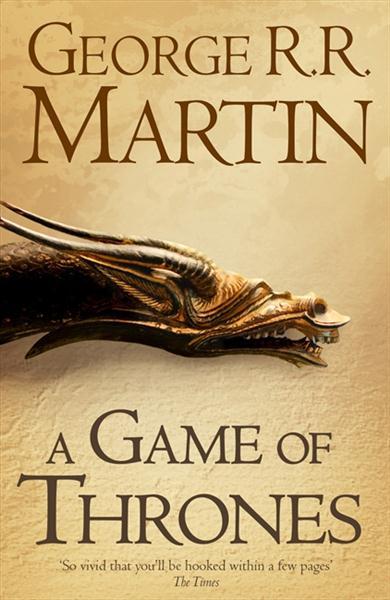
A Game of Thrones by George R. R. Martin
Yep, I finally gave in and started reading the books. And they're really good. So there you go.
 
Y The Last Man (Volume 2) by Brian K. Vaughan and Pia Guerra
Potential by Ariel Schrag
Y The Last Man (Volume 3) by Brian K. Vaughan and Pia Guerra
Doctor Who: The Cruel Sea by Scott Gray and Gareth Roberts
A Body Beneath by Michael DeForge


Aama (Volume 1) by Frederick Peeters
I fell in love with this ambitious French sci-fi comic almost immediately. The imagery is arresting and slightly disturbing, and there's something unmistakenly European about it that I can't quite put my finger on. 

Assessment of Giftedness by Julie Lamb Milligen
Maus by Art Spielgelman
Aama (Volume 2) by Frederick Peeters
Clash of Kings by George R. R. Martin
 

Beautiful Darkness by Fabien Vehlmann
The title is very apt. I avoided this graphic novel for a while because I'm kind of over all of that bubblegum-gothic fairy-tale stuff that Tim Burton has spun into millions of dollars, but I shouldn't have been so discriminatory. This comic is fantastically cute and dark without falling prey to cliche or  bland familiarity.

Y The Last Man (Volume 4) by Brian K. Vaughan and Pia Guerra
Chew (Volume 3) by John Layman and Rob Guillory

Daytripper by Fabio Moon and Gabriel Ba
Divergent by Veronica Roth


Superfreakonomics by Stephen J. Dubner and Steven D. Levitt
I love this stuff. Fascinating use of economic theory and statistical analysis to shine a light on just about everything. 

Looking for Alaska by John Green
A Storm of Swords: Steel and Snow by George R. R. Martin
Aama (Volume 3) by Frederick Peeters


Revival (Volume 1) by Tim Seeley and Mike Norton
Rural noir meets the undead in this tightly-plotted small town horror-drama. Vivid imagery and memorably complex characters. I read the first 5 volumes in quick succession and can't wait to read the rest.

The Madness of Cambyses by Herodotus
Blue by Pat Grant
The Rainbow Orchid by Garen Ewing
Insurgent by Veronica Roth


Blankets by Craig Thompson
I'm late to the party on this one but I couldn't immerse myself in the world of comics in 2015 without looking at some of the 'canon' titles. A lot has been written about Blankets over the years so there's not much I can really say that hasn't already been said other than that I found it startlingly beautiful and affecting. 

Seconds by Bryan Lee O'Malley
A Storm of Swords: Blood and Gold by George R. R. Martin
Allegiant by Veronica Roth
Sex (Volume 1) by Joe Casey


Tibet, Tibet by Patrick French
I read this while researching a Modern History unit on Tibet and found it really interesting. Journalist Patrick French smuggled himself into Tibet to get closer to the country's troubled history and manages to expose some of China's more outrageous and shocking Tibetan policies.

Mao and the Chinese Revolution by Yves Chevrier
The Pearl by John Steinbeck
A Farewell to Arms by Ernest Heminway
Y The Last Man (Volume 5) by Brian K. Vaughan and Pia Guerra


Building Stories by Chris Ware
If I had to pick a 'best' read of the last year I would, without a doubt, pick this genre and medium-defying 'comic' Building Stories. It's broken up into many parts in several different formats, which are kept in a box and can be read in any order. I interpreted the guide on the back of the box as instructions that indicated where in the house each part should be read (EG. This part in the lounge room, this one while standing at your kitchen bench, etc). As a result, it was a unique reading experience. It also helped that I found the narrative to be thought-provoking, compelling and emotionally gutting. Really worth checking out!

A Feast for Crows by George R. R. Martin 
Saga (Volume 5) by Brian K. Vaughan and Fiona Staples
Chew (Volume 5) by John Layman and Rob Guillory
Revival (Volume 2) by Tim Seeley and Mike Norton
Revival (Volume 3) by Tim Seeley and Mike Norton


Is Everybody Hanging Out Without Me? by Mindy Kaling
Kaling was hilarious in The Office, and has managed to defy several of the more despicable and conservative conventions of the American sitcom in her own show, The Mindy Project. Like her TV work, this memoir is equal parts hilarious and intelligent.

The Bolshevik Revolution (Volume 2) by E. H. Carr
Likewise by Ariel Schrag
Revival (Volume 4) by Tim Seeley and Mike Norton
The Name of the Wind by Patrick Rothfuss
Stalin and Kruschew: The USSR, 1924-64 by Michael Lynch


The Gigantic Beard That Was Evil by Stephen Collins
A brilliantly unique, one-of-a-kind fable about modern life and conformity. This graphic novel would be a great English text for a number of modes and grades.

Doctor Who: The Blood of Azrael by Scott Gray and Mike CollinsThe Killing of History by Keith Windschuttle
Revival (Volume 5) by Tim Seeley and Mike Norton
Chew (Volume 5) by John Layman and Rob Guillory

And that's it. Phew! 'Twas a good year. Roll on 2016.