It's a well-worn discussion within the ever-diversifying community of film critics around the world - is the 'Best Film' Oscar awarded at the Academy Awards a true indicator of quality?
In a word, no.
But that doesn't mean that these films aren't without value. Sometimes when the Academy votes a film as the 'Best Picture' of that year, well, they do get it right. But other times, admittedly, there are a slew of films that only get acknowledged through nomination, are overlooked, or are just flat-out ignored.
I watched each of the winners from the last 90-odd years of the Academy Awards and decided to rank them. Be warned, this is a matter of personal preference - some films (Braveheart, Forest Gump) I found it hard to dismiss because of how much nostalgia I have for them as a child of the '80s and '90s, so this is a list of personal preference. Alongside my gut feeling for each film I also assessed the movies using a range of criteria and scoring them accordingly - giving a score out of 10 for how valuable I felt the viewing experience was, score out of 10 for how entertaining the film was, score out of 5 for performances, and a score out of 5 for how rewatchable it was.
Another disclaimer, this list originated as a Twitter thread (@LukeBartolo1). This means the capsule review of each film was necessarily short to fit the character-limit decreed by Twitter. That said, I've expanded on most of my rankings below since I don't have that restriction here.
Without further ado, here's the list from my least favourite to most favourite.
94 of 94. The Great Ziegfeld (1936) A biopic about an early 20th century theatre producer. So incredibly boring, long, and without drama. I have no doubt that it's possible to make a salacious and vibrant biopic about the man behind the Ziegfeld Follies... but this isn't even remotely that film. It's very much a casualty of the static production values that characterised many of the first talkies, in which Hollywood production teams believed the existence of a synchronised sound track was of enough interest to keep audiences engaged. In my mind this is easily the worst of all the films to win Best Picture.

93 of 94. My Fair Lady (1964) An obnoxiously long version of Pygmalion. I much prefer the '30s film version... this musical adaptation just didn't do it for me: I found the songs forgettable, the characterisations extra-annoying, and the set pieces far too extended. Rex Harrison won Best Actor for this and I'm not sure how this happened as it was also the year in which Peter Sellers was nominated for playing three incredibly memorable characters in Dr Strangelove.
92 of 94. Broadway Melody of 1929 (1929) It's not a bad film but it's difficult to see why this would be considered 'best' of anything. It made an impact at the time for its groundbreaking use of sound and music but nearly everything about the film has dated in the many years since. Some scenes are fun (such as those involving the sisters discussing their ambitions) due to the fact that this film was made pre-
Hays Code but overall
Broadway Melody suffers from the same static creakiness that afflicts
The Great Ziegfeld and so many other early talkie films.
91 of 94. Cavalcade (1933) This adaptation of a Noel Coward play is boring now and was probably also boring back then too. Little has been done to make the play's episodic drama more cinematic, and Cavalcade's melodramatic po-faced sentiment does little to endear the characters or plot developments to a film audience.
90 of 94. Chariots of Fire (1981) It's an okay movie, I guess, just weird that it won Best Film over Raiders of the Lost Ark and Reds. It's also... really... slow. I don't hate this film, it just doesn't do much for me.
89 of 94. Around the World in 80 Days (1956) Cantinflas is great in this, he's the true star and it's his performance alone that makes this watchable. His bits are generally entertaining but, boy, at a very disjointed three hours this film more than wears out it's welcome. I suspect a lot of its impact in the '50s was due to the myriad surprise cameos but many of these quick appearances will be lost on modern audiences - which calls into question what the Academy means when it says 'Best Film'; are they attempting to establish a legacy or is it just about what was popular that year?
88 of 94. A Beautiful Mind (2001) Watchable but not great. None of the best films of 2001 (Ghost World, Donnie Darko, The Pledge, Storytelling) even got nominated for Best Film so I guess A Beautiful Mind won by virtue of not having much official competition... that said, I'd probably have still given the award to the also-nominated Moulin Rouge.
87 of 94. Chicago (2002) Films like this remind you of how old the average voter within the Academy is (as of 2012, the average age is 62). Chicago isn't a great film, it's not even a great musical.
86 of 94. The English Patient (1996) Like Elaine in Seinfeld, I didn't think this was much chop. Fargo, Trainspotting, or Hamlet should've won for 1996. As it stands, The English Patient is just a little too dull.
85 of 94. Gigi (1958) Charming performances (Maurice Chevalier's twinkling narrator comes to mind) but also an ultimately forgettable musical, which is probably for the best considering how out of time and problematic the film's attitude is towards women and minors. It's actually quite a disturbing film if you look at the way 16-year-old Gigi is being groomed by the 33-year-old Gaston.
84 of 94. Grand Hotel (1932) The all-star cast keeps this melodrama bubbling along but it's very much a stodgy product of its time, with its popularity mostly a result of using actors who could convincingly talk on screen (this was one of the first big ensemble films of post-silent era Hollywood). Young Joan Crawford is easily the standout.
83 of 94. Out of Africa (1985) Another film that has dated badly. Not particular amazing in any respect, except in getting to see Meryl Streep do another stop on her '80s tour of world accents.
82 of 94. Crash (2005) One of those ensemble 'big theme' films that briefly became very popular in the '00s after the success of Traffic. This long-form lecture on racism is very Hollywood and just not that great a film.
81 of 94. Oliver! (1968) Fun songs, fun performances. I enjoy Oliver! but don't find myself revisiting it very often. I can find something to like about most if not all of the Best Picture winners from this point onwards.
80 of 94. Ordinary People (1980) A little too ordinary in some respects, but a solid drama buoyed by an Oscar-winning performance from Timothy Hutton, and some great supporting turns from Donald Sutherland, Mary Tyler Moore, and Judd Hirsch.
79 of 94. The Hurt Locker (2008) A visceral and arresting experience, but also a film with some significant flaws that manage to annoy people on both sides of the political spectrum. I was willing to give Kathryn Bigelow the benefit of the doubt on this one but when she later made Zero Dark Thirty I found my perspective on her shifted (and not for the better). Anyway, The Hurt Locker is pulled along by a star-making performance from Jeremy Renner and some intense action sequences.
78 of 94. Driving Miss Daisy (1989)
An entertaining enough film. Driving Miss Daisy is one of the shortest films to win the Best Picture award (it was certainly the shortest up until the 1990s, but I haven't checked beyond that). It's another movie that's a little dated by today's standards in terms of its positioning and treatment of race, but it also has Morgan Freeman in his breakout performance, so there's that.
77 of 94. Terms of Endearment (1983) The mega-weepie of the '80s. Decent drama with some terrific performances from MacLaine, Winger, and Nicholson.
76 of 94. Tom Jones (1963) An adaptation of a literary classic that won plaudits for pushing the bounds of early '60s censorship (British films were not bound by the Hays Code like their American counterparts and, in a way, this film signalled the end of this self-imposed censorship on Hollywood films). Tom Jones is irreverent, energetic, and a fun period piece with an impossibly young Albert Finney in fine form.
75 of 94. Mrs Miniver (1942) The success of this British WW2 propaganda film was all to do with timing, as it came out just after America had joined the war. That said, it's quite well-acted and well-made.
74 of 94. The Greatest Show on Earth (1952) Nowhere near as bad as some modern critics would have you believe. There's lots of unnecessary circus fluff but Cecil B. DeMille knows how to create a true spectacle. This film is also worth watching for an early leading performance from Charlton Heston and a surprising supporting turn from Jimmy Stewart (who is in clown make-up for the entire duration).
73 of 94. Cimarron (1931) This should probably be a lot lower due to its appalling politics and stereotyping (many lists of this sort tend to place
Cimarron last) but I can't help myself... Richard Dix's awful and hammy performance is mesmerising, the narrative is an unmitigated car crash of absolute nonsense that you can't look away from, and the production values are truly epic in scope. It's also never boring.
72 of 94. Slumdog Millionaire (2008) Not a bad film, and always good to see a different kind of story recognised by the Academy. I find it hard to criticise Slumdog Millionaire because it's an enjoyable and uplifting film with some originality.
71 of 94. The Sound of Music (1965) Some will be scandalised that this isn't higher in my list but it just wasn't a part of my childhood in the way that it clearly was for others. I only watched The Sound of Music for the first time this year. Great songs though, and Julie Andrews and Christopher Plummer are very good in their leading roles.
70 of 94. The Sting (1973) The quintessential long-con movie. It would be higher on my list except for the fact that it's only the 2nd best of the Redford-Newman team-ups. Robert Shaw is great as the Irish mobster villain.
69 of 94. How Green Was My Valley (1941) John Ford's gentle and beautiful love letter to Wales, to another time and place, and to the great Golden Era character actors of Hollywood. I'm a sucker for Ford films and it's amazing that more of them didn't make this list (though perhaps not unexpected since a lot of his best films are Westerns, one of the genres often ignored by the Academy Awards).
68 of 94. West Side Story (1961) I dig it. I'm keen to see the remake. Great concept and execution, just a little overlong.
67 of 94. You Can't Take It With You (1938) Not Capra's best film by a long shot but it's still full of life and good humour in that patented Capra fashion. Capraesque! You also can't go past Jimmy Stewart, he lights up every film he's in.
66 of 94. Million Dollar Baby (2004) There's something quite moving in the performances of the three leads that makes this a better film than it should be. A character-driven film elevated by Hillary Swank, Morgan Freeman, and yes - even Clint Eastwood.
65 of 94. Annie Hall (1977) This is a great film. I find it hard to watch now because Woody Allen makes my skin crawl, but this film gets points for humour, Diane Keaton's performance and iconic fashion, and young Christopher Walken as a very disturbed young man.
64 of 94. An American in Paris (1951)
Gene Kelly at the top of his game - this film is mostly a series of impressive set pieces loosely connected to a plot that's best not thought about all that much. The last dance number is transcendent art.
63 of 94. Hamlet (1948) No one did Shakespeare like Olivier. It's not the best film version of Hamlet yet it still has a lot of merit. Laurence Olivier was way too old to play the Danish prince but it doesn't matter, this is the greatest Shakespearean actor doing the greatest Shakespearean character. What else do you need to know?
62 of 94. Argo (2012) A fun ensemble piece and one of the few thriller-ish movies to win Best Film. I suspect it'll become more forgotten over time but, on it's own terms, it's a fascinating true story well-told, and a great piece of history put on celluloid.
61 of 94. The Artist (2011) A skilful tribute to everything that made the silent film era so wonderful. A tour de force of editing and inventive visual storytelling, like all the best pre-talkie films. The cast are wonderful too.
60 of 94. Shakespeare in Love (1998) I know it's got its problems but, look, the '90s weren't a great time for English language cinema in general. I enjoy this film a lot, plus it has Martin Clunes in it - who knew he would ever star in a Oscar-winning Best Film?
59 of 94. Titanic (1997) It's hard to deny James Cameron's technical accomplishment in pulling this film off, especially after others had tried and failed. This is a truly impressive staging of the infamous disaster that eclipses every previous attempt and will make it near impossible for anyone to attempt it again for a very long time. Kate and Leo go alright too.
58 of 94. Kramer vs. Kramer (1979) A hard, poignant, heartbreaking film that takes the most ordinary thing and puts it centre-stage in a way that few films had done before, or had done so well. Masterclass realistic performances from Meryl Streep, Dustin Hoffman, and young Justin Henry.
57 of 94. All the King's Men (1949) A towering performance from Broderick Crawford and a sadly relevant examination of politics being a journey to Hell paved with good intentions. One of the best American films made about power and corruption.
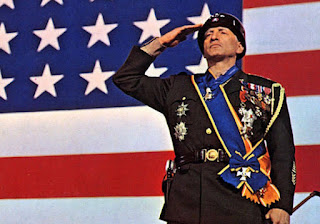
56 of 94. Patton (1970) Another film pulled along by an all-consuming performance, this time by the incomparable George C. Scott as General Patton. A fascinating biopic of a complex and controversial figure.
55 of 94. Going My Way (1944) A pleasant and relaxing comic-drama from a time when the most controversial Catholic priest in cinema was Bing Crosby singing 1940s pop standards in order to keep street kids out of trouble (how edgy!) It's not a big or especially showy film but I love this one for Irish character actor Barry Fitzgerald's performance as the amusingly inflexible Father Fitzgibbon.
54 of 94. Green Book (2018) I feel dirty placing this so high... it's a bit on the nose and misjudged with its incredibly ripe use of the 'white saviour' trope. The performances of Mahershala Ali and Viggo Mortensen are so engaging that I still enjoyed it a lot despite its flaws. Mortensen really transformed himself.
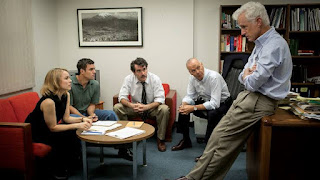
53 of 94. Spotlight (2015) A film as much about journalism as it is about real life institutionalised abuse. For a movie essentially about a bunch of people doing research it's surprising how compelling and by-the-seat-of-one's-pants it is. I kept expecting the film to push into more conventional narrative directions but writer-director Tom McCarthy stays true to the material and manages to keep it razor-sharp.
52 of 94. The Best Years of Our Lives (1948) Groundbreaking in its depiction of PTSD in the post-WWII context. The Best Years of Our Lives is worth watching especially for real life veteran and double-amputee Harold Russell, one of only two non-actors to ever win an acting Oscar.
51 of 94. Amadeus (1984) I was obsessed with this film in my early 20s... such a rich, vibrant study of jealousy and of the nature of talent. F. Murray Abraham gives a star-making turn as the resentful Salieri.
50 of 94. It Happened One Night (1934) Fast, funny, screwball, road movie romance of opposites attracting. Gable and Colbert were both megastars for a reason. Claudette Colbert in particular gives a great comic lead performance. Hard to fault this early Frank Capra classic!
49 of 94. The Life of Emile Zola (1937) Affecting biopic of a controversial historical figure whose persecution highlighted Europe's longstanding anti-Semitic attitudes. Great performance from actor's actor Paul Muni (a young Robert De Niro idolised him). Also an interesting film in the sense that it focused on and pushed through issues that the American censorship board was very much not comfortable with at the time.
48 of 94. All About Eve(1950) Marvellously catty drama of stardom and ambition. Great supporting coded performance from George Sanders.
47 of 94. The King's Speech(2010) Well-acted, well-scripted, and genuinely moving dramatisation of recent British Royal history. Also just a great story, and a film that brings history to life while managing to have a wide appeal to audiences. The unshowy but assured direction gives The King's Speech a timeless quality that means it will be very watchable for many years to come.
46 of 94. Gentleman's Agreement (1947) One of the early 'social issue' pictures that broke new ground in Hollywood by looking at anti-Semitism directly (during the aforementioned 'Hays Code' era [1933-1960], a time of heavy censorship). Good performances; earnest and engaging.
45 of 94. Ben-Hur (1959) The epic to end all epics. William Wyler's classic biblical adventure still thrills and astounds with great action set pieces (like the famed chariot race) and a strong moral core. Charlton Heston holds the screen like few others and would come to exemplify 'the Epic' like few other actors thanks to his work in this film.
44 of 94. The Last Emperor (1987) Like Amadeus, this was another '80s film that I was obsessed with in my early 20s. A beautiful, elegiac study of a civilisation's decline, and the only English language movie to ever film inside China's Forbidden City. It looks amazing, plus I'm a bit of a sucker for Chinese history - I just find it fascinating.
43 of 94. Wings (1927) One of only three silent films to win Best Picture. Wings is a romantic WW1 epic that holds up surprisingly well thanks to impressive (and death-defying) practical effects and pre-Hays Code humour. Watch out for an obnoxious subtext though!
42 of 94. Rebecca (1940) Alfred Hitchcock's first Hollywood film and - amazingly - his only Best Picture win. Rebecca is a suitably tense adaptation of the classic gothic novel, though it does bowdlerise the lesbian undertones of the novel. Laurence Olivier and Joan Fontaine are great in their leading roles.
41 of 94. Nomadland (2020) A timely and insightful portrait of displacement and poverty among ageing women in the Western world. Frances McDormand is the perfect foil for America's haunting post-Route 66 landscapes, and both absorbs and reflects the ambivalence of her character's situation.
40 of 94. Mutiny on the Bounty (1935) The best of the three major film versions of this story. Charles Laughton is the greatest Captain Bligh, and this film still holds up nearly 90 years later as a great blend of history and character-led drama.
39 of 94. Sunrise (1927) One of the times the Academy got it right. With Sunrise, the Oscars recognised a groundbreaking piece of art when it was first released (rather than retrospectively). Sunrise frequently appears on critics' Top 10 Films of All Time lists for good reason. Visually dazzling, morally complex and ambiguous, and something that resonates all through the ages - Sunrise is an astounding film that stands as testament to the inventiveness and creativity of the silent film era.
38 of 94. Platoon (1986) A potent and visceral memoir of the Vietnam War experience as directed and written by veteran-auteur Oliver Stone. One of the times America took a long, hard, bitter look at one of its biggest mistakes. Unforgettable.
37 of 94. Twelve Years a Slave (2013) Hard to believe that it took until 2013 for the first black-centred and black-authored U.S. slave narrative to make its way to the screen. Steve McQueen brings this painful piece of foundational history to life with expert craftsmanship and a sure eye for detail. Perfectly pitched.
36 of 94. Marty (1955) In an era of glamour and square-jawed studio stars, the sincere realism of Ernest Borgnine's friendly butcher Marty really stands out as a welcome slice of authenticity. There's something universal about this 'little' story of a bachelor's once-in-a-lifetime shot at love and happiness. It must have been surreal for people in 1950s America to see something much closer to their own lives on the screen than the usual polished Golden Era studio stories they were accustomed to. The writing and acting of Marty both transcend their time.
35 of 94. The Lord of the Rings: The Return of the King (2003) Let's be honest, this represents Peter Jackson's entire Lord of the Rings trilogy. This was a big event at the time. The special effects have dated remarkably quickly but the power of the adaptation hasn't diminished.
34 of 94. A Man for All Seasons (1966) Paul Schofield, a master-thespian in one of his rare screen appearances, dominates this compelling adaptation of the play of the same name (in which he originated the leading role). As a dramatisation of Sir Thomas More's ideological defiance of King Henry VIII, it's hard to think of how this could have been sharper or classier.
33 of 94. No Country For Old Men (2007) Hard-boiled neo-noir / neo-Western from the Coen Brothers at their peak. There's a certain vicarious joy in watching everything unravel as Javier Bardem's mesmerising psychopath stalks the screen as a modern-day Angel of Death. Great performances from Josh Brolin, Kelly Macdonald, and Tommy Lee Jones as well.
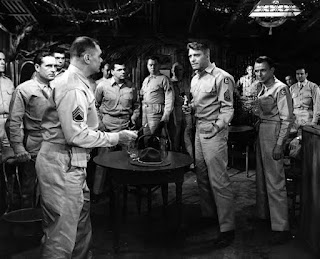
32 of 94. From Here to Eternity (1953) All-star account of American soldiers in Hawaii and the unexpected Japanese attack on Pearl Harbor that heralded U.S. entry into WWII. Iconic and unforgettable (that beach scene between Burt Lancaster and Deborah Kerr! Montgomery Clift in an Oscar-nominated performance! Frank Sinatra in his breakout dramatic acting role!), and one of the great classics of Golden Era Hollywood.
31 of 94. Lost Weekend (1945) One of the first great Billy Wilder films (he has many, one of which turns up further down this list). Lost Weekend pushed the envelope on appropriate film content in the 1940s while combining wit with substance. Ray Milland's role as the hapless alcoholic at the film's centre was the highlight of his career.
30 of 94. Gone With the Wind (1939) There aren't many films that do what Gone With the Wind does or do it as well... it's a romance, a war film, a historical epic. Most of all it's a powerhouse vehicle for both Vivien Leigh and the majesty of early technicolor.
29 of 94. The Apartment (1960) Billy Wilder's mature dramedy features Shirley MacLaine and Jack Lemmon at their best. You have to read between the lines to understand the full extent of what these characters mean to each other, and the events that are taking place. A memorable fable for the modern age and a film that helped signal the end of the Hays Code.
28 of 94. Braveheart (1995) It's one of the most historically inaccurate films ever made and is an incredibly manipulative piece of filmmaking, but I also watched it endlessly as a teenager and I love Patrick McGoohan (who plays the villainous King Edward Longshanks). I remember being 15 and going off to research the figures from this film, only to find out how weirdly distorted Mel Gibson's version of events was. I loved finding out the real history for myself so, in a way, this film helped start my journey in eventually becoming a History teacher! Anyway, Braveheart is a great 'popcorn' flick, as they say.
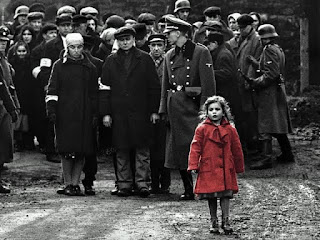
27 of 94. Schindler's List (1993) It would be hard to not know what this film is or what it's like, such has been its ubiquity whenever someone discusses Holocaust cinema. And for good reason. Steven Spielberg was already a technically-ambitious director when he attempted
Schindler's List but had only delved into the realm of more serious dramatic fare once or twice. This resulting film was (and is) unforgettable and searing.
26 of 94. In the Heat of the Night (1967) The archetypal progenitor of the 'cop-uncovers-ongoing-racism in the Deep South' crime subgenre. Still compelling 50 years later thanks to the acting of Sidney Poitier and Rod Steiger as the odd couple police officers brought together by a murder case.
25 of 94. The Departed (2006) A sprawling Boston mob saga of stressed loyalties and deep cover. I actually prefer Scorsese's grandiose streetwise version to the stripped-back Hong Kong original (the minimalist Infernal Affairs). The Departed also gets points for its use of the songs 'Gimme Shelter' and 'Shipping Up to Boston'.
24 of 94. The Shape of Water (2017) It's rare to see fantasy films recognised at the Oscars but Guillermo Del Toro's fable of 'otherness' couldn't be more deserving. A compelling portrait of love, marginalisation, and empowerment - also full of humour and humanity.
23 of 94. Gladiator (2000)
Before Lord of the Rings and Marvel, Ridley Scott was the first to redefine the blockbuster for the 21st century with this unexpected return to the spectacle and splendour of the 'Sword and Sandals' epic. Joaquin Phoenix's Commodus is an entertaining proto-Joffrey.
22 of 94. Rocky (1976) For better or worse, without Rocky we wouldn't have about 200 boxing, sports, rags to riches, or Sylvester Stallone films. Sequel-heavy legacy aside, Rocky remains a charming and invigorating 'small' movie of one man against the odds.
21 of 94. Rain Man (1988) There are some elements that are problematic but I find it hard to dislike Rain Man. For many it was the first time autism (or something like it) took centre-stage in mainstream cinema. Dustin Hoffman and Tom Cruise make a surprisingly watchable duo.
20 of 94. Casablanca (1942) A great WWII noir-ish romance set in the shadows of Nazism. Endlessly quotable, memorable performances, and still admirable for its strong anti-fascist message.
19 of 94. American Beauty (1999) This film signalled the end of the '90s and all that the nuclear family had endured in the name of pop culture up until that point. The Burnham family's schadenfreude-like collapse fuels an engaging tragicomic-drama filled with arresting characterisations, darkly funny performances, and memorably subversive scenes. Let's just not talk about Kevin Spacey.
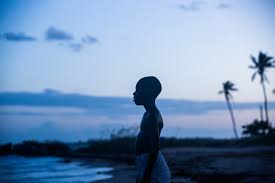
18 of 94. Moonlight (2016) A beautiful and delicately tense film that's more groundbreaking than most people realise (note that it doesn't end in tragedy or heartbreak like a lot of LGBT-centric representations in mainstream cinema throughout the '90s and '00s). Mahershala Ali's supporting role is loaded with so much symbolism... I found this film riveting from start to finish.
17 of 94. Dances with Wolves (1990) Not the best of the 1990 nominations (I'd have awarded Goodfellas) but the one that won and, as such, still a great film worthy of attention. Dances with Wolves is a flawed yet moving epic in the David Lean mode, and one of only three Westerns to win Best Picture. Its imagery and tragic undertones resonated with me for a long time in the '90s!
16 of 94. Midnight Cowboy (1969) Same old story of a country boy who comes to New York, falls on hard times, becomes a prostitute, and befriends a decrepit street survivor. Dustin Hoffman is perfection as the proto-Costanza outcast Ratso Rizzo. Disturbingly memorable - but the most shocking thing about Midnight Cowboy is probably that the Academy was courageous enough to give it the Best Film award.
15 of 94. Gandhi (1982) It's not an envelope-pushing film but I place it so highly in this list because it's a great story well-told. There's an art to doing cinematic justice to a historical figure like Mohandas Gandhi, and Gandhi is easily one of the best of the biopics that the Academy has awarded.
14 of 94. Forrest Gump (1994) It's hard to overstate how massive Forrest Gump was in 1994. Suspect political subtext aside, it's a very fun film with some still-amazing special effects. Tom Hanks sells the character so completely, and the irreverent tour of the American 20th century is undeniably entertaining.
13 of 94. All Quiet on the Western Front (1930) It would be a long time before Hollywood experienced an anti-war film quite like this again. The Hays Code that came into full effect about 3 years after All Quiet on the Western Front, making it impossible for films of this thematic nature to be put on the screen (at least this explicitly) until about 1960. The message holds up... it's still perhaps the most haunting and authentic WWI film.
12 of 94. Unforgiven (1992) Brutal, uncompromisingly revisionist Western in which Clint Eastwood deconstructed both his own image and the myth of the old West. Complexly layered and visually arresting.
11 of 94. Parasite (2019) I think about this movie a lot. I'm still thinking about it now. Such a hypnotic mix of social commentary, humour, suspense... Bong Joon-ho also creates perfect mise en scene - the sequence where the family's hovel fills up with floodwater is incredible.
10 of 94. The French Connection (1971) The gritty '70s cop thriller to which all subsequent alike films owe a massive debt. Gene Hackman's Popeye Doyle is one of the great indelible anti-heroes of cinema. Intense and darkly electric, and featuring an all-time great car chase.
9 of 94. On the Waterfront (1954) Elia Kazan made this film for a shitty reason but Marlon Brando's characterisation of Terry Malloy saves it. Brando's method-work here is one of the most influential performances in all of cinematic history, and he surprises in so many subtle ways. Brando is so good in this that he singlehandedly pushes On the Waterfront into the Top 10.
8 of 9. Lawrence of Arabia (1962) Another film built around a towering performance, this time it's Peter O'Toole offering a morally complex and ambiguous characterisation amidst David Leann's grand WWI-adjacent desert scenery. A truly unforgettable experience.
7 of 94. Birdman (2014) Absolutely incredible, and finely acted by everyone in it. Sometimes I think that everything that can possibly be done in film has already been done, but Birdman defied my expectations on multiple levels. It's one of those films where I couldn't get my head around how they actually made it. Incomparable.
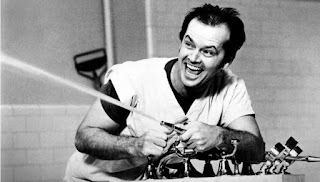
6 of 94. One Flew Over the Cuckoo's Nest (1975) Institutionalisation, conformity, individuality, authority, freedom... this thematically-rich modern fable is one of the great pieces of American cinema. It also features the archetypal Jack Nicholson role.
5 of 94. The Silence of the Lambs (1991) Much is made of Anthony Hopkins as Hannibal Lector but that's not the only reason why this film remains one of the greatest psychological crime thrillers ever made. Silence of the Lambs is perfectly constructed, eerily creepy, and also features Jodie Foster in top form.
4 of 94. The Godfather Part II (1974) Francis Ford Coppola made lightning strike twice with this - the best sequel ever made. The Godfather II adds to the themes of the first film in new and meaningful ways. It also features Robert De Niro in his breakout star-making role, and presents an unconventional and compelling dual narrative. Hard to place at number 4 on this list - could be higher on some days!
3 of 94. The Deer Hunter (1978) Few films about PTSD, the far-reaching impacts of war, and the lives of the working class pack the same visceral and emotional charge as The Deer Hunter. Few films have scared me as much as this film's infamous Russian roulette scenes.
2 of 94. The Bridge on the River Kwai (1957) David Lean's POW film expertly balances character-based conflict with action, adventure, and the ambiguities of war. Cue Alec Guinness in his Oscar-winning performance with that fantastic final line... I love this film so much.
1 of 94. The Godfather (1972) And here's my Number 1. I looked hard at the list and considered the way in which my taste has changed over time, the changing nature of cinema itself, and I still couldn't go past The Godfather. I've watched it dozens of times and it never ceases to impress me. It's a beautiful, operatic meditation on the corruption of the American dream, and it features so many great scenes and performances. It's perfect cinema.